
2026-05-28
Share


Introduction
What happens when traditional university classrooms and teaching labs meet industry‑leading UE5 real‑time rendering and ultra‑high‑frame‑rate display systems? In 2026, The Hong Kong University of Science and Technology (HKUST) completed the upgrade of its immersive, multi‑functional interactive center.
This space is not just a visual landmark; it is the university’s only “research infrastructure” that integrates high‑precision scientific demonstrations, multimodal interactive teaching, and digital outcome replication. As the full‑case solution provider, Spectrum Creative delivered end‑to‑end hardware‑software optimization, adding a new dimension to academic teaching and research.
Chapter 1: Breaking Spatial Boundaries – From “Display Screen” to “Educational Medium”
In HKUST’s requirements, an immersive space is far more than a visual output device – it is a “digital educational medium” that sparks research inspiration and teaching innovation. The project was positioned as an integrated platform for research‑grade data visualization, virtual simulation labs, and high‑spec academic presentations.
The university chose Spectrum Creative because of the system integrity we offer as an “immersive full‑solution provider.” We do not simply integrate hardware; we also bring industry‑leading patented technologies:
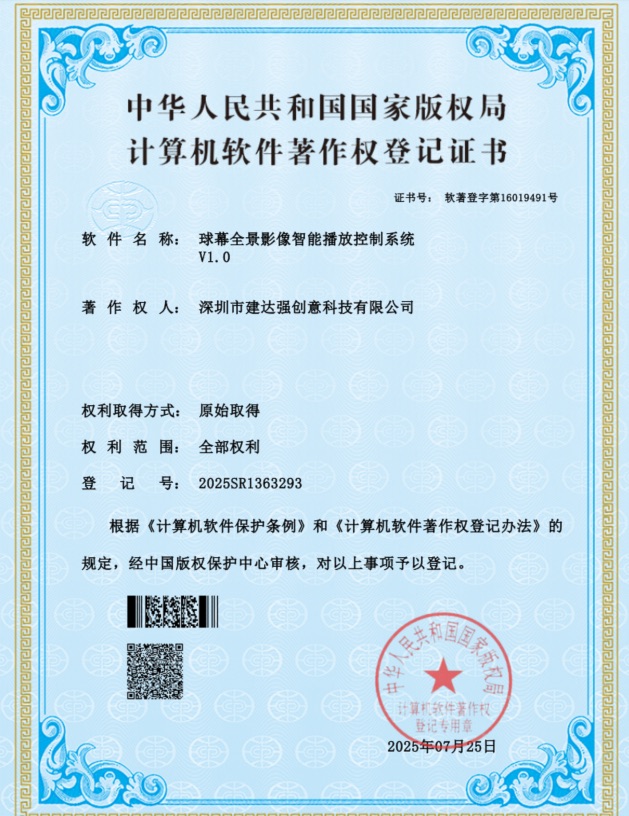
· Full‑link Playback Control (Patent: Spherical Panorama Intelligent Playback Control System for Dome Screens) – For complex multi‑faceted immersive spaces, we apply our proprietary spherical panorama intelligent playback control system. It precisely solves geometric distortion and color inconsistency across multi‑screen stitching, ensuring microsecond‑level synchronization and seamless images – whether on flat walls or irregular structures.
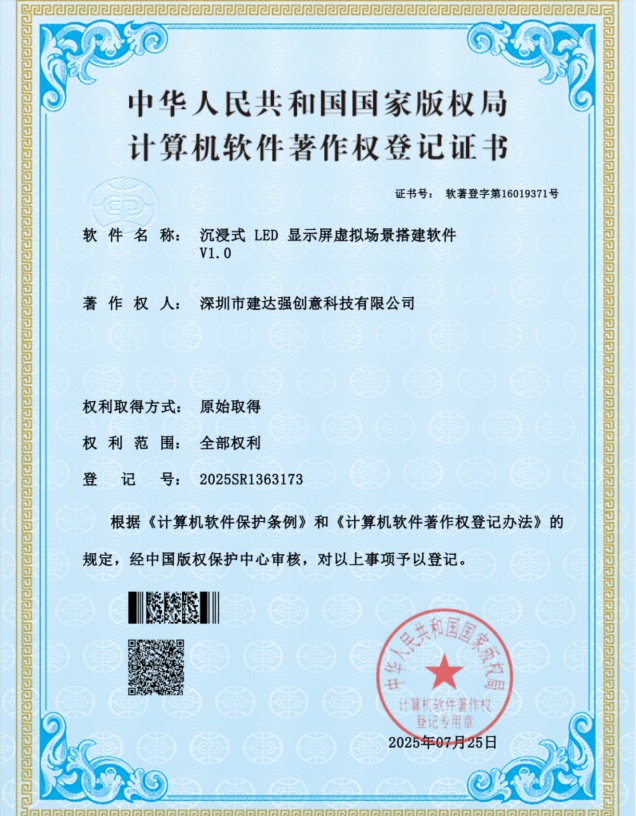
· Spatial Modeling (Patent: Virtual Scene Construction Software for Immersive LED Displays) – The sense of immersion largely depends on the fidelity of scene construction. Using our “Immersive LED Display Virtual Scene Construction Software,” we quickly configure virtual environments and simulate scenes at the design stage. This allows high‑fidelity digital replication of complex research settings or historical architectures (e.g., Dunhuang Mogao Grottoes), ensuring tight visual alignment between virtual and real scales.
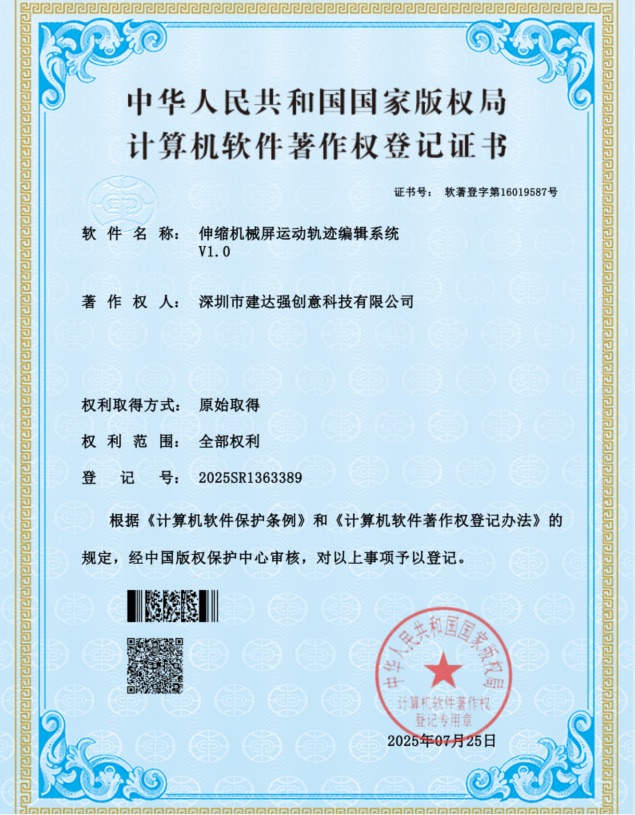
· Mechanical Integration (Patent: Telescopic Mechanical Screen Motion Trajectory Editing System) – To enhance interactive flexibility in teaching spaces, the project incorporates advanced mechanical interaction functions. With our “Telescopic Mechanical Screen Motion Trajectory Editing System,” the display panels not only serve static presentations but also perform multi‑dimensional dynamic movements and trajectory editing based on teaching needs. This elevates the presentation of research outcomes from “flat” to “spatial,” meeting the university’s demanding requirements for a complete solution.
This three‑dimensional closed loop of “patented technology + hardware manufacturing + content adaptation” ensures exceptional stability from installation through long‑term operation – a core advantage that few other integrators can replicate.
Chapter 2: Research‑Grade Image Quality – Defining a New Benchmark for Teaching Displays
To meet the high demands of scientific demonstrations for color accuracy and visual smoothness, the space is equipped with industry‑leading hardware specifications:
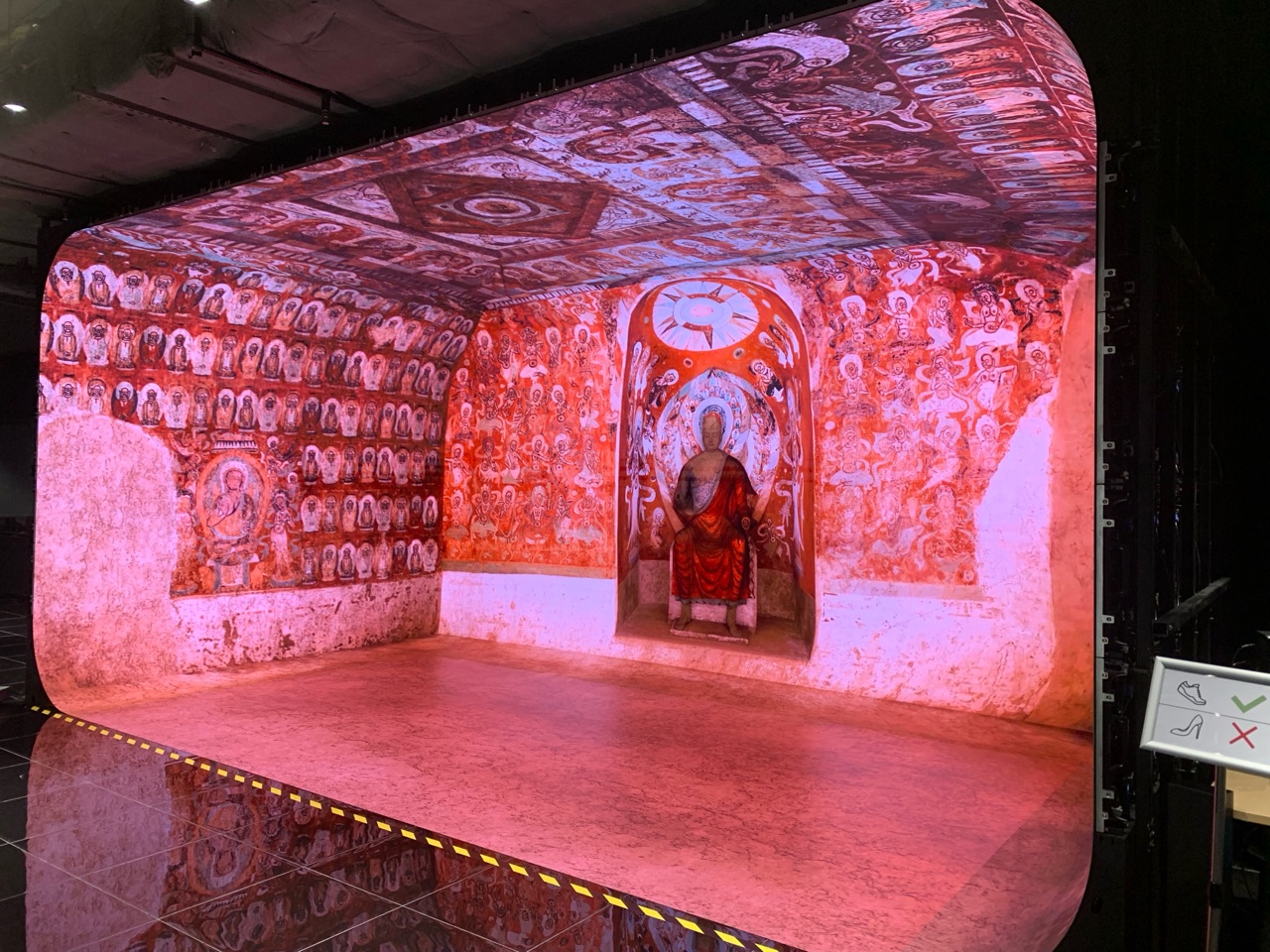
· Extreme Visual Experience – P1.9 fine pixel pitch, total display area of 84.5 m², forming a five‑sided fully enclosed space including floor and ceiling.
· Cinema‑Grade Quality – 7680 Hz ultra‑high refresh rate, DCI‑P3 wide color gamut, and active 3D technology, delivering spatial depth far beyond flat screens – making research data models feel tangible.
· High‑Frame‑Rate Stability – 120 Hz output (twice that of conventional platforms), ensuring ultra‑smooth visuals during high‑speed scientific simulations and 3D rendering, eliminating the stutter and tearing often seen in academic presentations.
Chapter 3: Engineering Craftsmanship – The Perfect Balance of Silence and Precision
In a university environment, construction complexity is far greater than in commercial spaces. To safeguard the teaching experience, we made targeted optimizations:
· Flush, Seamless Floor Integration – A specially designed recessed structure aligns the high‑strength floor tiles perfectly with the surrounding floor level. As audiences walk in, there is no physical boundary – truly “immersive, zero‑distraction.”
· Research‑Environment Optimization – A silent ventilation and heat‑dissipation system, plus additional load‑bearing supports, ensures quiet, stable, and durable operation under high‑frequency teaching use.
· Zero Tearing – Our proprietary FSD (Frame Synchronization Display) technology achieves microsecond‑level synchronization across all five screens, maintaining geometric consistency during research presentations.
Chapter 4: Interaction Empowers – Digital Teaching Transformation with UE5
In HKUST’s immersive space, interaction is not just a technology showcase – it is a reshaping of teaching logic. Powered by the industry’s most advanced UE5 (Unreal Engine 5) rendering engine, the platform upgrades traditional “passive lectures” into “immersive interactive teaching.”
· High‑Precision Research Data Visualization & Real‑Time Manipulation
The platform breaks the old constraint of presenting only static charts, supporting high‑precision import and real‑time interactive manipulation of 3D data models.
· Research‑Driven Performance – Whether complex engineering mechanics models, architectural structures, or microscopic molecular data, the system renders them in high‑precision 3D.
· Paradigm Shift from Viewing to Manipulation – In this space, teachers and students are no longer mere “viewers” of information but “operators” of data. Through the interactive system, research teams can scale, cut, rotate, and examine models from multiple angles – significantly deepening logical understanding of research topics and making complex, abstract data tangible and accessible.
· “Time‑Travel” Scene Replication & Historical Restoration
For humanities and history teaching, the system excels beyond scientific visualization.
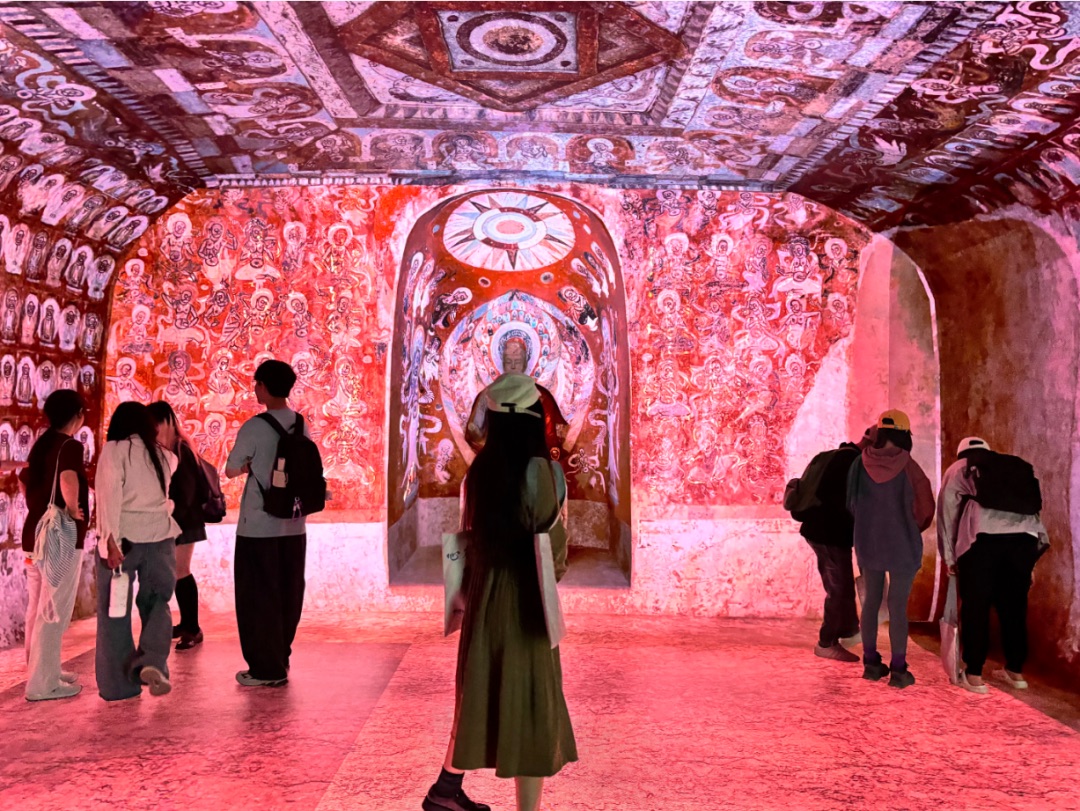
· Example: Dunhuang Mogao Grottoes Tech‑Themed Exhibition – Not a simple video playback, but a digital restoration of cultural relics using UE5’s photorealistic lighting. Teachers and students feel as if they are inside a Dunhuang cave, observing details impossible to see with traditional teaching methods.
· Leap in Teaching Formats – This technology effectively transcends time and space, bringing historical knowledge, macro‑geographic scenes, or hard‑to‑visit experimental environments into the classroom through immersive experiences – greatly broadening teaching scope and expressiveness.
· A Rare Digital Innovation Practice Platform in Higher Education
This platform is now HKUST’s only high‑end integrated space combining immersive visualization, real‑time interactive presentation, public project display, and teaching scene replication.
· Innovative Teaching Infrastructure – It provides students with a digital practice and innovation showcase environment that is among the best in China and rare in academia. Students can present their research and design concepts using cutting‑edge interaction methods, offering a high‑spec window for academic output.
· Enhanced Interactive Teaching Efficiency – By making “complex structures visible” and “abstract knowledge tangible,” the system significantly boosts student motivation and engagement, providing a powerful digital foundation for academic research and teaching innovation.
Chapter 5: From Research Lab to Academic Curatorial Space – Application at HKUST (Guangzhou)
An immersive space is not only a testbed for R&D but also a “digital canvas” that can grow and host diverse themes. At HKUST (Guangzhou), the interactive center built by Spectrum Creative has successfully transformed from a laboratory into a “multi‑functional academic curatorial space,” thanks to extreme color control and high flexibility in scene switching.
Case Focus: “Cave Dance” Digital Curation
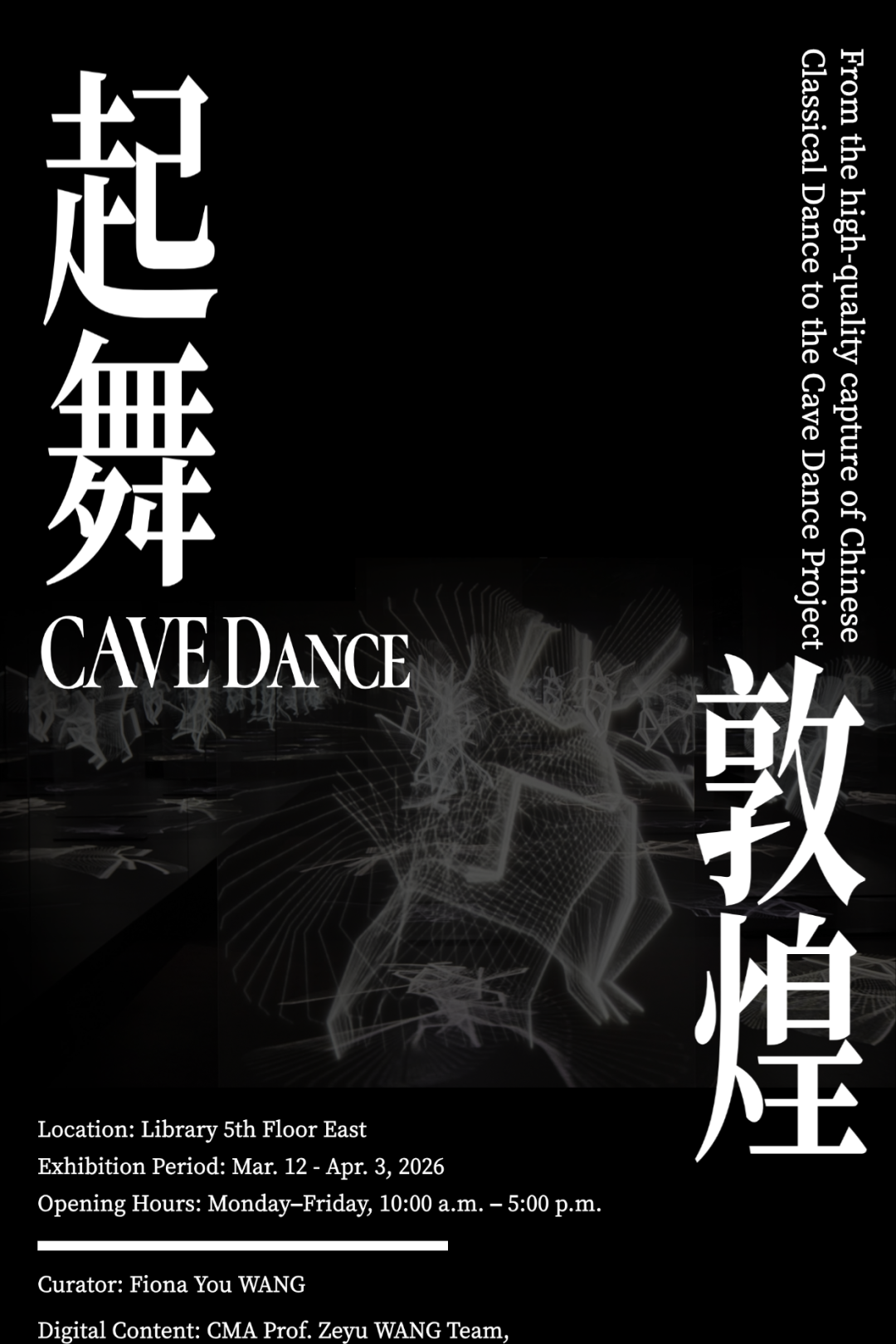
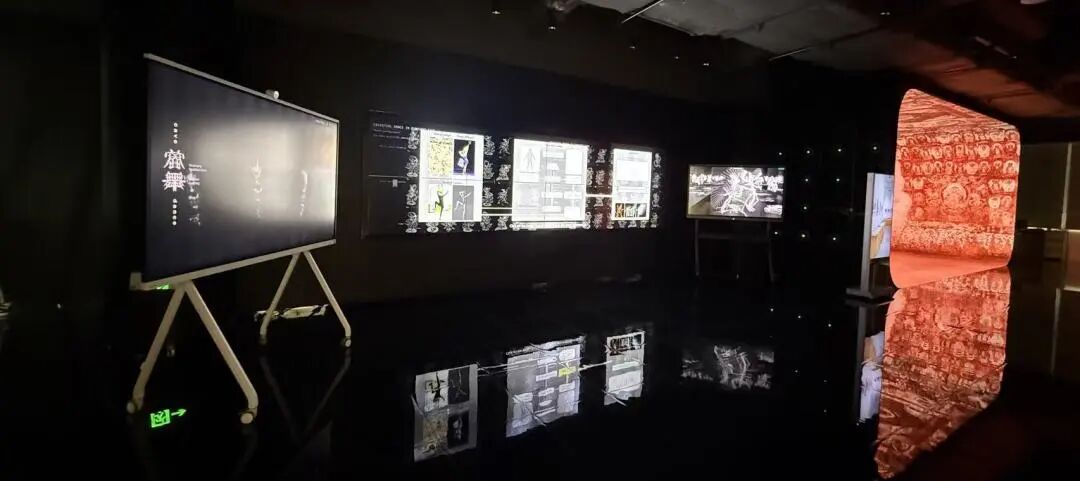
In March 2026, a themed exhibition titled “Cave Dance” was held on the fifth floor, east side of the library. As the core infrastructure, our “Cave Screen” immersive installation served as a bridge between ancient culture and contemporary technology:
· Carrier of Digital Art – Through spatialized screens and digital imagery, the system deconstructed and reinterpreted the imagery, colors, and compositions of Dunhuang art into contemporary digital art forms.
· Immersive “New Grotto” – Entering the installation, teachers and students step into a digitally constructed “new grotto,” experiencing the beauty of Dunhuang through a journey between virtual and real – a leap from “static viewing” to “immersive experience.”
Integration of Art and Technology – Rigorous Color Fidelity
As a platform for academic painting exhibitions and digital art installations, color reproduction directly determines the purity of artistic expression. Leveraging DCI‑P3 wide color gamut and professional calibration, the space restores complex color details of Dunhuang artworks with millimeter‑level accuracy – proving that our system is both scientifically rigorous and artistically expressive, meeting the most demanding image‑accuracy requirements for interdisciplinary research.
Digital Upgrade of Academic Exchange – “Spatializing” Theoretical Data
During the “Cave Dance” exhibition, the platform transformed traditional flat academic discussions into three‑dimensional knowledge exchange. Teachers and students immersed themselves in the exhibition, fostering cross‑disciplinary conversations on digital humanities, digital art, and the integration of technology with cultural heritage. The space made abstract cultural treasures “visible and tangible,” and accumulated valuable practical experience for future interdisciplinary research collaborations.
“Reconfigurable Digital Assets” – Dynamic Reshaping of Academic Spaces
The excellence of this system lies in its reusability – it is not a one‑time fixed installation but a high‑value “reconfigurable digital asset.” Powered by UE5 and frame synchronization, the space instantly switches scenarios based on curatorial needs:
· Academic Mode – High‑stability data demonstrations for rigorous research presentations and multi‑disciplinary simulation experiments.
· Art Curation Mode – An expressive digital narrative platform for cultural art exhibitions such as “Cave Dance.”
This flexible “theme‑switching” mechanism allows the space to continuously participate in contemporary knowledge generation, maximizing the academic operational efficiency of the campus public space.
Conclusion: Supporting Digital Practice in Higher Education
The HKUST immersive project is another example of Spectrum Creative using hardcore technology to support academic innovation. The space has become a rare digital practice and research outcome presentation platform on campus. We have not only delivered superior visual performance but also, through systematic engineering methodologies, helped HKUST take a solid step forward in research visualization and innovative education.
Frequently Asked Questions (FAQ)
Q1: Why do universities and research institutions prefer immersive solutions based on UE5 for digital upgrades?
A: Unlike traditional flat‑video displays, UE5‑based solutions offer real‑time rendering and high‑freedom interaction. They can present complex research data, micro‑structures, or macro‑historical scenes with photorealistic lighting, and allow teachers/students to instantly manipulate models (e.g., cut, rotate, zoom). This transforms “passive viewing” into “active exploration,” greatly deepening logical understanding and classroom immersion.
Q2: How does Spectrum Creative balance engineering stability and visual impact in immersive LED projects (like the Dunhuang exhibition)?
A: We adopt an “engineered system design” approach. First, high‑precision die‑cast aluminum modular cabinets ensure structural stability and installation accuracy. Second, our proprietary spherical panorama playback control system eliminates distortion from irregular stitching, achieving seamless integration of image and physical space. This makes the project reliable not only for short‑term events but also for long‑term, high‑frequency use.
Q3: Beyond visual presentation, what core teaching value does an immersive space provide?
A: The space breaks physical limitations through digital means. It is not just a visual demonstration center but a “digital foundation” for innovation practice, project presentation, and multi‑disciplinary simulation. Universities can use the platform to replicate experimental environments, allowing students to simulate complex research processes safely and cost‑effectively – significantly improving the efficiency of digital innovation practice.
Q4: What are Spectrum Creative’s advantages in the creative LED display field compared to other manufacturers?
A: Our core advantage is the full‑chain closed loop of “creative design + hardcore engineering + software enablement.” We are not only a hardware manufacturer but also a solution provider – owning multiple software copyrights (spherical panorama control, scene construction system, etc.) and a global delivery track record across diverse scenarios (e.g., Thai mall dome, Sanlitun immersive pop‑up). We provide customized end‑to‑end services from 3D rendering design to on‑site construction.
Q5: Does Spectrum Creative support custom development for special irregular‑shaped LED screens?
A: Absolutely. We have R&D capabilities for curved, cylindrical, spherical, and kinetic screens. Based on your specific spatial dimensions and functional needs, we perform structural subdivision and module layout design, and provide motion trajectory editing and content adaptation – ensuring the final creative effect fully matches your project vision.