
2026-09-18
Share


"If the universe is not flat, but spherical — how should we understand it?"
A century later, this question has been answered again.
But this time, the answer does not come from physicists.
It comes from engineers.
When an immersive spherical dome lights up, when stars flow across a 360° curved surface, and when audiences stand at the center of the sphere completely surrounded by visuals — the answer becomes clear:
We are no longer watching the universe.
We are entering the universe.
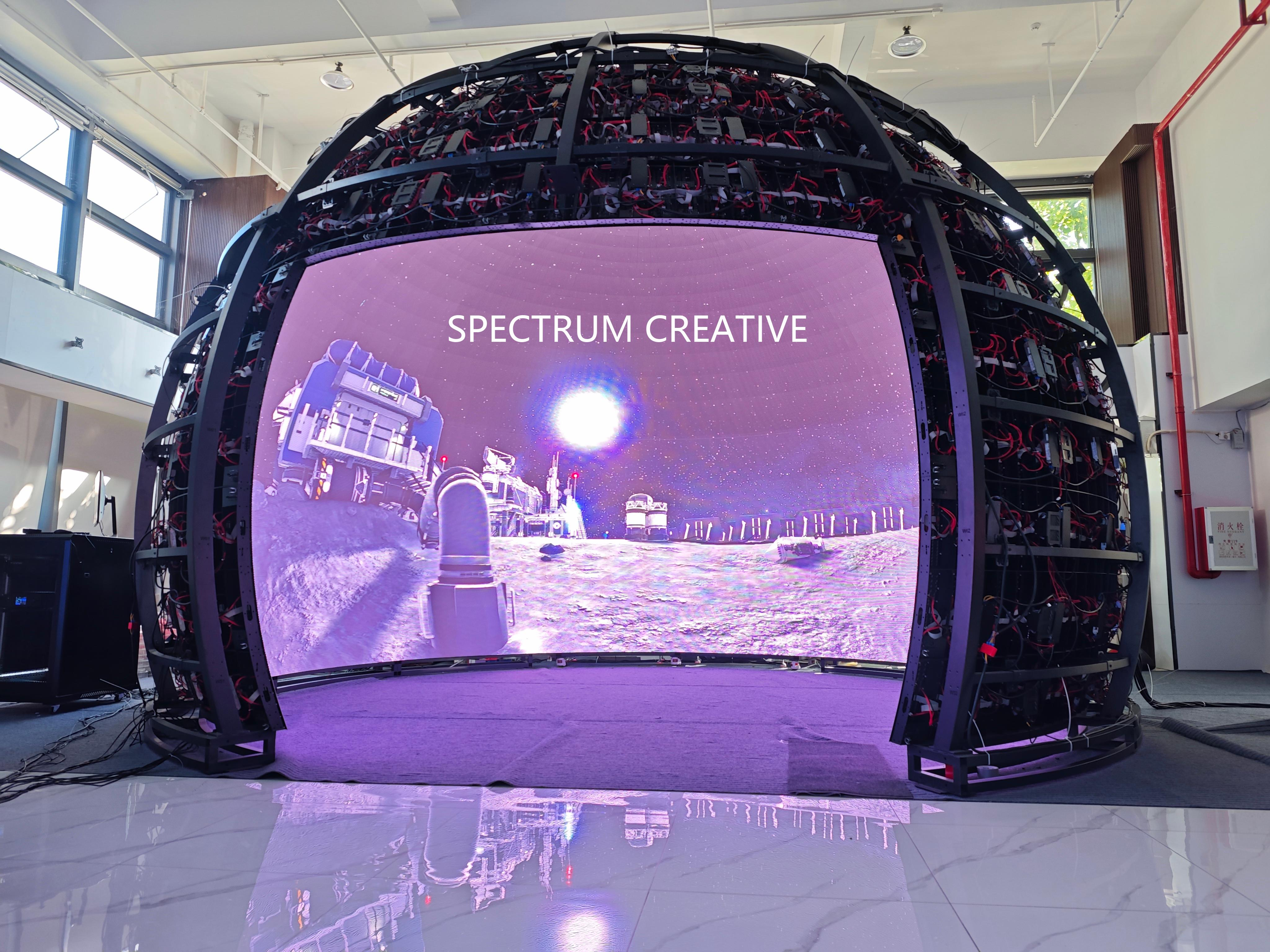
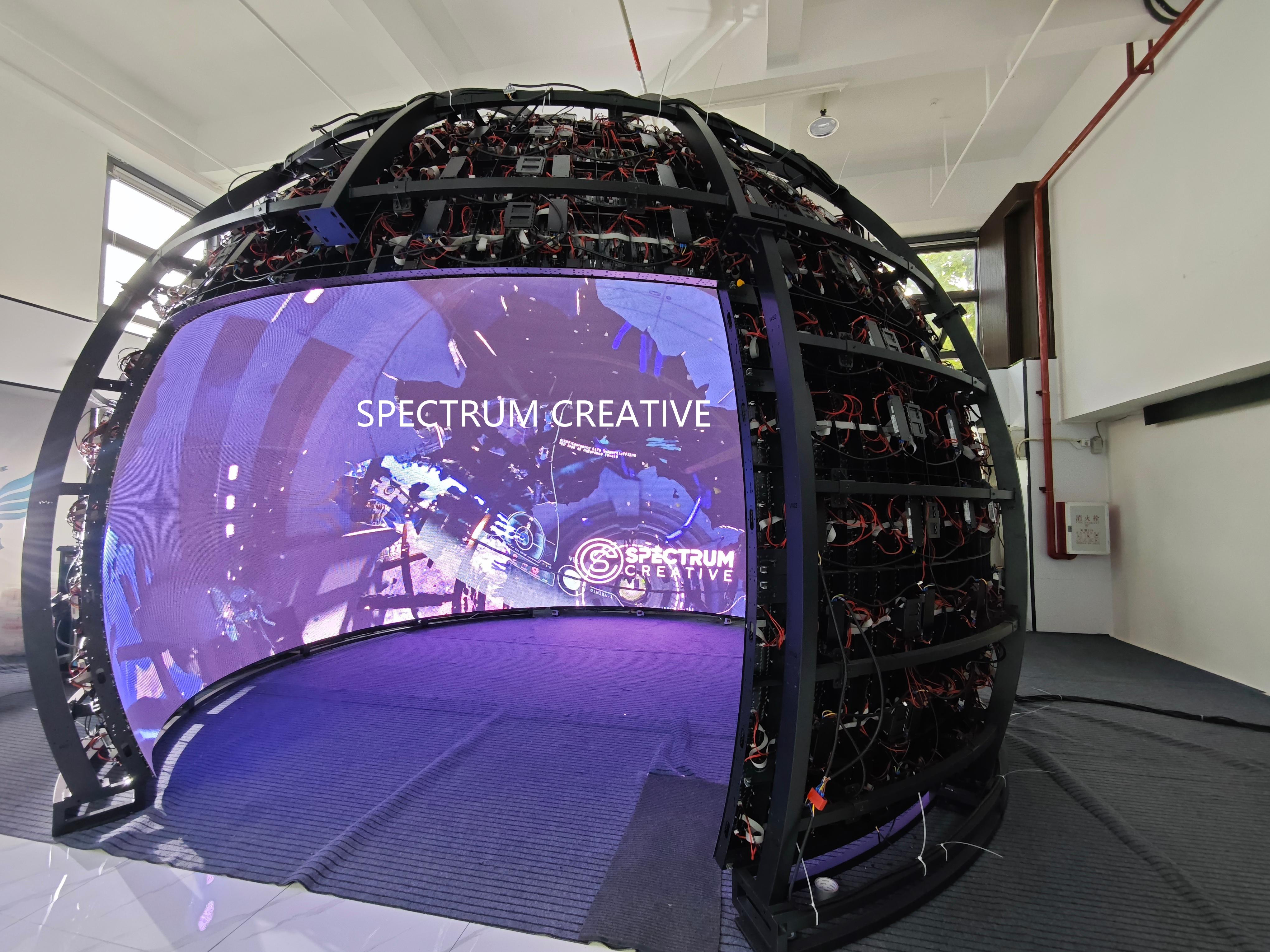
The origin of spherical immersive displays began with planetariums.
In 1923, the first optical planetarium projector was developed in Jena, Germany, projecting artificial stars onto the inner surface of a dome.
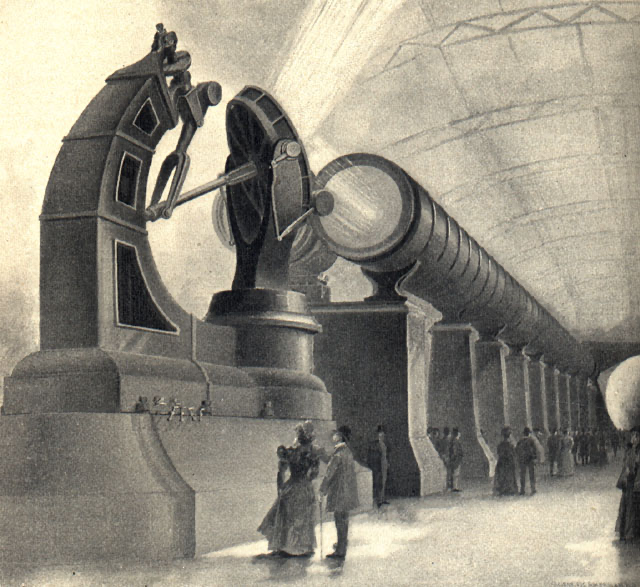
For nearly a century, projection-based domes became the standard solution for:
Planetariums
Science museums
Educational centers
Using lamps, lenses, and multiple projectors, these systems recreated the night sky and astronomical environments.
However, projection technology has always faced fundamental limitations:
Dark environments are required
Calibration is complicated
Lamp replacement is unavoidable
Brightness and contrast are limited
Then came LED technology.
LED spherical domes replaced traditional optical projection with:
Self-emitting pixels
Modular LED structures
Pixel-level calibration
Long-life display systems
This was not simply a hardware upgrade.
It was a complete paradigm shift.
LED spherical dome systems are transforming from specialized planetarium equipment into full-scale immersive platforms for:
Science education
Research simulation
Digital art
Commercial experiences
Cultural exhibitions
According to industry research, the global immersive display and spherical display markets continue to expand as demand grows for immersive entertainment, digital visualization, and interactive experiences. Some market reports estimate the immersive display in entertainment market will grow from approximately USD 3.65 billion in 2025 to USD 4.48 billion in 2026, representing a CAGR of 22.7%.
The global spherical display market is also expected to continue expanding as more industries adopt 360-degree visualization technologies.
More importantly, LED spherical dome technology is no longer limited to astronomy.
It is becoming a new foundation for immersive spaces.
The original purpose of spherical domes was scientific visualization.
From astronomy education to cosmic simulation, domes allowed audiences to experience:
Stars
Planets
Galaxies
Space environments
LED spherical domes are accelerating this evolution by replacing traditional projection systems with brighter, higher-resolution, and more accurate visual experiences.
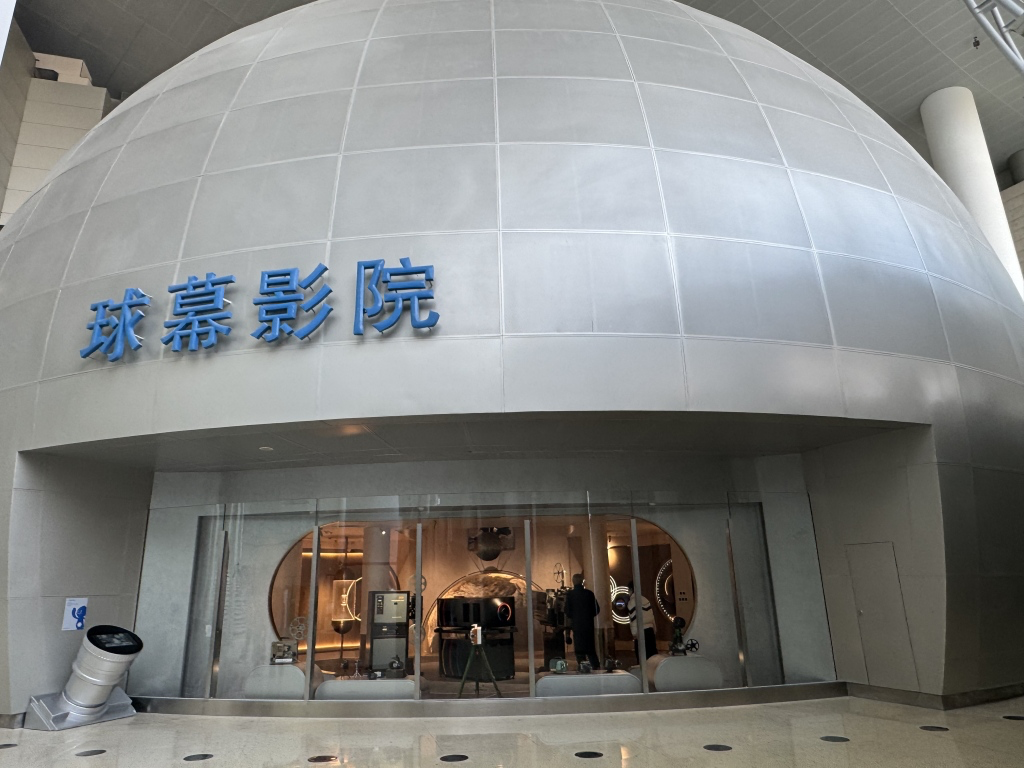
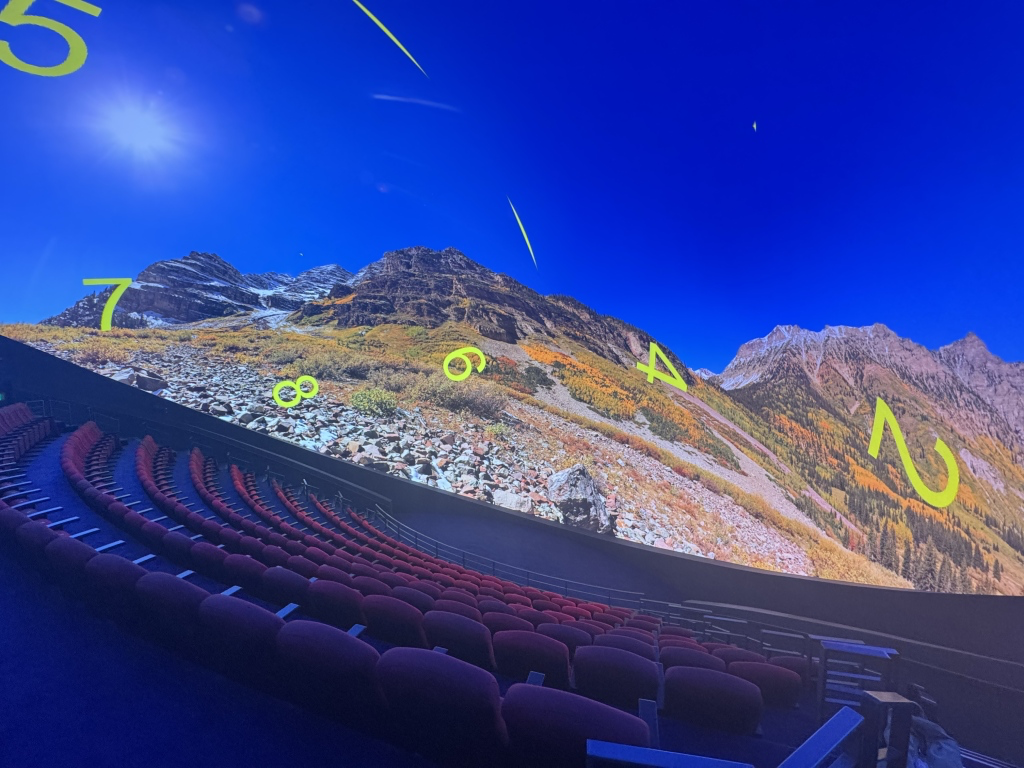
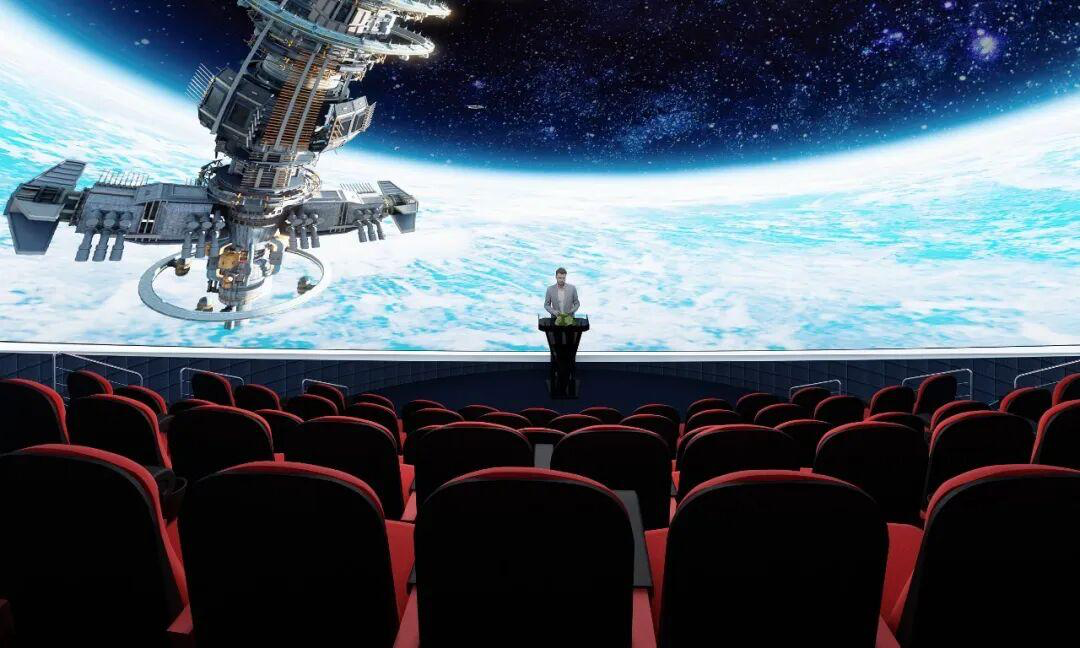
The Shanghai Science and Technology Museum’s LED Dome Theater represents this transformation. The official introduction describes it as China’s first LED Dome Theater in a science popularization venue, featuring a 23-meter diameter dome, 8K-level immersive LED imaging technology, and a fully enclosed panoramic viewing experience.
When brightness reaches extreme levels and color accuracy becomes laboratory-grade, an LED spherical dome is no longer simply a display.
It becomes a physical simulation platform.
Spectrum Creative’s 6-meter RGBW dome solution for an Austrian research institution represents this direction.
With:
17,000 nits peak brightness
Ra ≥97 color rendering
ΔE <1.5 color accuracy
the system functions as a full-spectrum light simulation environment.
Instead of simply displaying sunlight.
It recreates sunlight.
The curved geometry of a spherical dome creates an entirely new canvas for digital artists.
Unlike traditional flat screens, a spherical environment removes the boundary between audience and content.
Artists can create:
Infinite landscapes
Cosmic environments
Digital ecosystems
Interactive visual narratives
The audience is no longer outside the artwork.
They become part of it.
The most exciting transformation is happening in commercial spaces.
Shopping malls, luxury retail destinations, and brand experience centers are increasingly searching for visual landmarks that generate:
Attention
Social sharing
Longer visitor engagement
From Las Vegas Sphere to Bangkok Siam Paragon, LED spherical displays are becoming iconic commercial assets.
The goal is no longer:
“Install a screen.”
The goal is:
“Create a destination.”
Another major advantage of LED spherical domes is scalability.
Projection domes are limited by:
Projection distance
Optical path
Projector arrangement
LED spherical domes are mainly limited by:
Engineering complexity
Investment scale
From small 2-meter retail installations to massive spherical venues, LED technology provides a scalable solution.
An LED spherical dome is not created by assembling LED modules alone.
It requires four core technologies working together.
When flat video content is displayed on a spherical surface, distortion naturally occurs.
The result:
Equator stretching
Polar compression
Just like placing a flat world map onto a globe.
3D Mapping technology solves this challenge through:
Content can be converted through:
Equirectangular projection
Cube mapping
to optimize spherical pixel distribution.
A 1:1 digital model of the physical sphere is created.
The system understands:
Every module position
Every pixel coordinate
Every viewing angle
The system calculates the real spatial position of each LED pixel.
A pixel-level Look-Up Table (LUT) is generated.
This ensures:
Every pixel.
Every module.
Every position.
Matches correctly.
Because pixel density varies between poles and equator areas, brightness compensation is required.
Through:
Alpha masking
Pixel calibration
Brightness adjustment
the entire sphere achieves visual consistency.
This algorithm foundation is exactly the principle behind Spectrum Creative’s Dome Playback Control Software V1.0, which focuses on spherical image coordinate calculation and real-time distortion correction.
An LED spherical dome consists of thousands of customized modules.
Calibration engineers use:
High-resolution cameras
Spatial measurement systems
Calibration software
to analyze every physical pixel position.
The system generates correction matrices that ensure:
From the equator to the poles,
every LED pixel displays:
the correct brightness,
the correct color,
and the correct image position.
Besides geometric distortion, spherical displays face another challenge:
Uneven brightness distribution.
The polar regions usually have higher module density than the equator.
Without correction:
Some areas become brighter
Colors become inconsistent
Advanced systems use:
Alpha masking
Pixel-level calibration
Color correction algorithms
to maintain consistent visual quality across the entire sphere.
A complete spherical LED system requires precise signal synchronization:
Content server
↓
Video processor
↓
Sending cards
↓
Receiving cards
↓
LED modules
↓
Pixels
Through hardware-level synchronization technologies such as Genlock, thousands of LED modules can display high-resolution content smoothly without tearing.
The result:
A seamless immersive visual experience.
LED spherical domes allow visitors to experience science beyond traditional screens.
Instead of watching stars through projection:
Visitors stand inside a digital universe.
Spectrum Creative’s RGBW dome solution demonstrates the scientific potential of immersive spherical environments.
With:
High brightness
High color accuracy
Full-spectrum simulation
the system becomes a physical simulation platform rather than a conventional display.
Commercial spherical domes are becoming new customer attraction engines.
Their value comes from:
360° visual immersion
Social media sharing potential
Long-term content updates
Brand activation opportunities
A spherical display is no longer just decoration.
It becomes a business asset.
From Dunhuang digital restoration to historical scene reconstruction, immersive spherical domes provide a new way to experience culture.
Visitors do not simply look at history.
They enter history.
From planetarium domes to commercial landmarks.
From projection systems to self-emitting pixels.
From passive viewing to active immersion.
The evolution of LED spherical dome technology answers one fundamental question:
How can humans experience worlds that do not physically exist?
When a spherical dome lights up.
When stars move across a 360° surface.
When audiences stand inside a digital universe.
The answer becomes obvious:
The future of screens is space.
And the future of space is immersive experience.
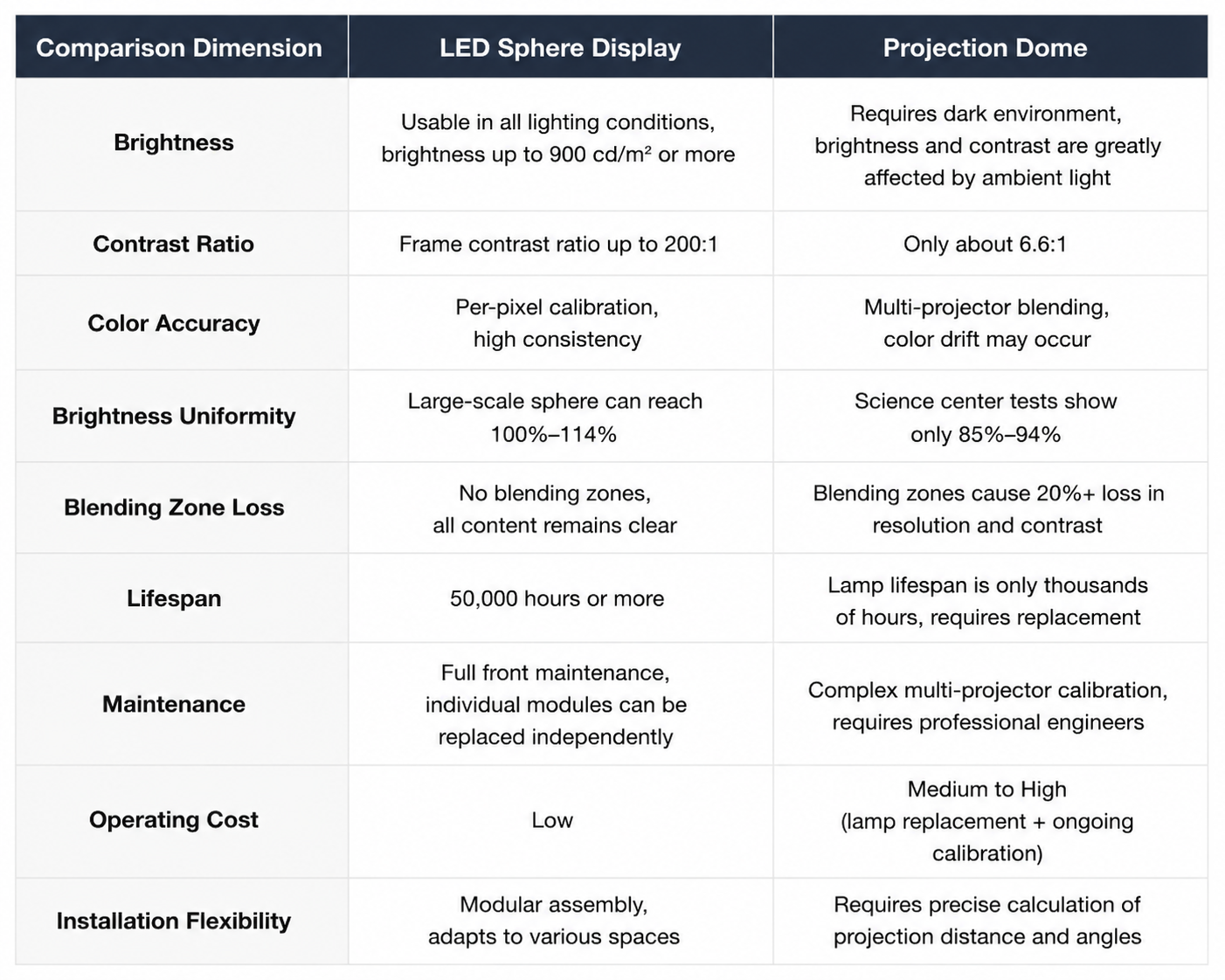
LED spherical domes provide higher brightness, better contrast, longer lifespan, and easier maintenance compared with projection systems.
Projection domes require dark environments and frequent optical calibration, while LED systems provide pixel-level control.
Through advanced 3D Mapping algorithms, spherical coordinate conversion, LUT generation, and pixel-level calibration, the system ensures accurate image placement across the entire sphere.
The timeline depends on size and complexity.
Small and medium commercial domes usually require several weeks, while large-scale scientific installations require longer engineering cycles.
Factory pre-assembly and modular installation can significantly reduce onsite construction time.
No.
Modern LED spherical systems support modular maintenance.
Individual modules can be replaced independently without dismantling the entire structure.
Applications include:
Science museums
Research centers
Commercial landmarks
Cultural exhibitions
Brand experience spaces
Entertainment venues
From small retail installations to large-scale immersive venues, LED spherical dome technology is redefining how people experience digital environments.
How LED Spherical Dome Became a Commercial Attraction Engine
Siam Paragon 4.8m P3 LED Sphere: Engineering a Commercial Landmark
The Digital Foundation Behind Creative Displays: Spectrum Creative Software-Hardware Integration Whitepaper
Spectrum Creative Official Website: cn.spectrumcreative.cn