
2026-10-15
Share


A wall used to be just a wall.In traditional commercial spaces, walls function as boundaries, partitions, and backgrounds. Stone, wood, paint, wallpaper — the material defines the expression of the surface. Once installed, that expression is fixed.
But commercial spaces have never needed to stay fixed.
Commercial spaces need change. Morning, afternoon, night. Weekdays, weekends, holidays. Different times, different visitor flows, different marketing moments — a space should be able to present different expressions. Traditional architectural materials cannot do this.
Then screens arrived.
Brands began mounting LED screens onto walls, replacing material with pixels. But the problem with a screen is that it always remains a screen. Its frame reminds people that it is an installed device. There is still an invisible boundary between the audience and the surface.
In 2026, this is beginning to change.
At international exhibitions such as ISLE 2026 and ISE 2026, a clear trend is emerging: screens are evolving from devices mounted onto buildings into surfaces integrated within architecture.
Designers are no longer simply attaching screens to buildings. Instead, they are integrating digital media directly into architectural surfaces. Retail environments are turning storefronts into dynamic brand experiences. Corporate spaces are using digital surfaces to express culture and identity. Urban development projects are exploring how media façades can create landmarks that define entire districts.
In Toronto’s Berczy Square, a 90-foot LED installation is blurring the boundary between digital signage and architecture. It is designed more like a living architectural element embedded into the building experience than a traditional digital sign. The building façade is no longer just an exterior boundary. It is becoming a programmable layer.
This is not about making a bigger screen.
It is about the evolution of the architectural surface itself.
The global media façade market was valued at approximately USD 2.356 billion in 2025 and is expected to continue expanding at a compound annual growth rate of 21.30%. The global creative LED display market reached approximately USD 1.921 billion in 2025 and is projected to reach USD 3.662 billion by 2032.
Behind these numbers is a clear signal: brands and developers are shifting their budgets from installing screens to creating dynamic surfaces.
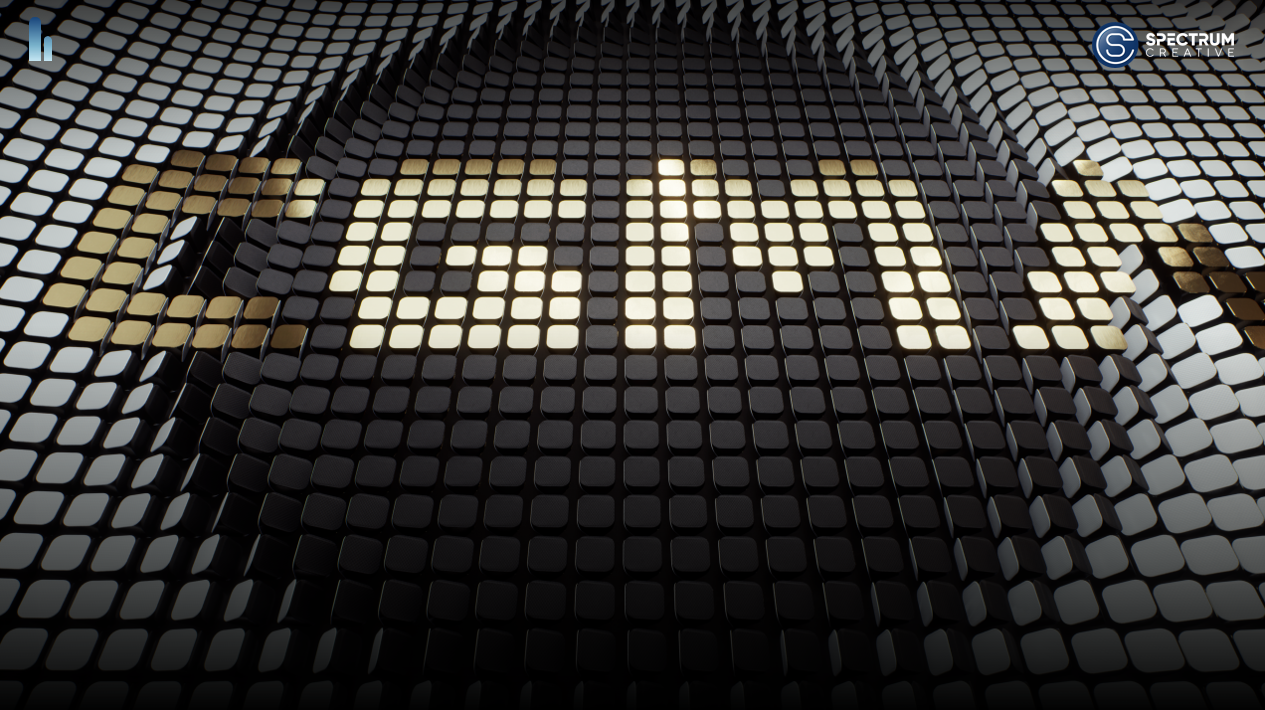
Over the past decade, the solution seemed simple: wherever visual attention was needed, brands installed a screen.
But the limitations of screens are becoming increasingly obvious.
A screen is still a screen.
The frame, thickness, and mounting structure all remind consumers that this is a device added onto the space. It occupies space, but it does not fully belong to the space.
A screen plays content, but it does not truly exist as part of the environment.
There is an invisible wall between people and the screen. You look at it, but it does not look back. It does not change when you approach. It does not breathe with time.
The more screens there are, the weaker each screen becomes.
Digital fatigue is spreading. Consumer attention spans are getting shorter. Emotional response to content is weakening. Banner blindness is becoming more common.
More than 70% of consumers say that a well-designed commercial space with a unique experience is a key factor in their consumption decisions. But a “well-designed experience” is not the same as “hanging up another screen.”
Commercial spaces do not need more screens.
They need architectural surfaces that can come alive.
Stone, wood, metal panels, glass curtain walls, and decorative coatings offer real texture, but their expression is fixed. Once installed, the appearance of the space is locked in. Seasonal changes, holiday campaigns, and brand updates are difficult to reflect.
LED screens bring pixels onto the wall and make content changeable. But the screen remains a screen. Its frame, thickness, and mounting structure still tell people that this is a device installed onto the building.
At this stage, LED modules and architectural structures are deeply integrated. The screen disappears, and the surface itself emerges.
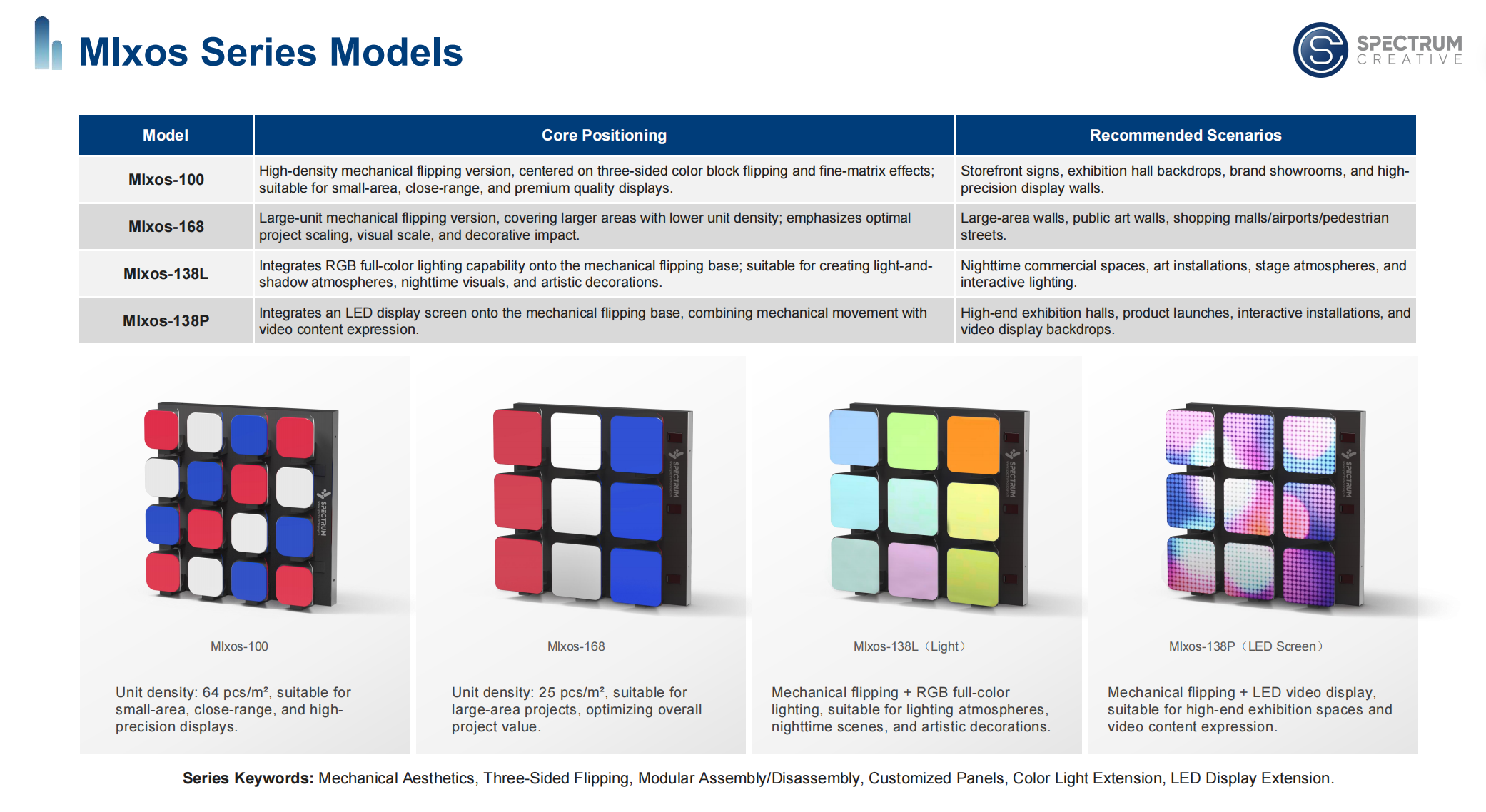
The Mlxos Series is a typical example of this direction. Thousands of triangular prism units are embedded into the wall. Through physical flipping, the surface presents dynamic visuals without direct light emission, glare, or a screen frame. It is no longer a screen mounted onto a wall. It is a wall that can breathe.
Architectural façades are evolving into programmable communication platforms. The shift from “a building with a screen” to “the building as a screen” represents a new paradigm.
This is not about making the screen thinner. It is about making the screen disappear, so the architectural surface itself gains dynamic capability.
The core idea behind the Mlxos Series is simple: give the architectural surface itself dynamic capability, instead of mounting a screen onto it.
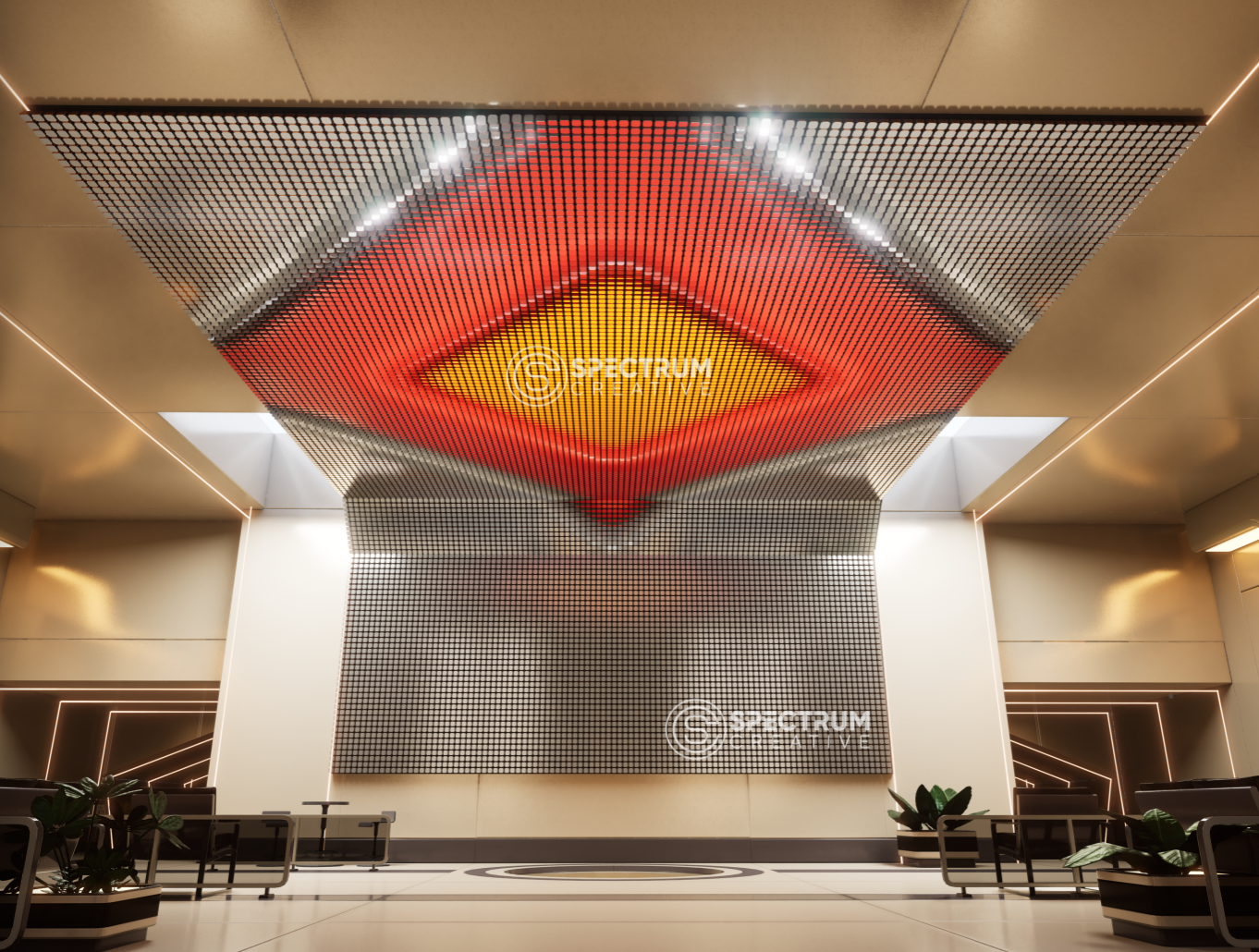
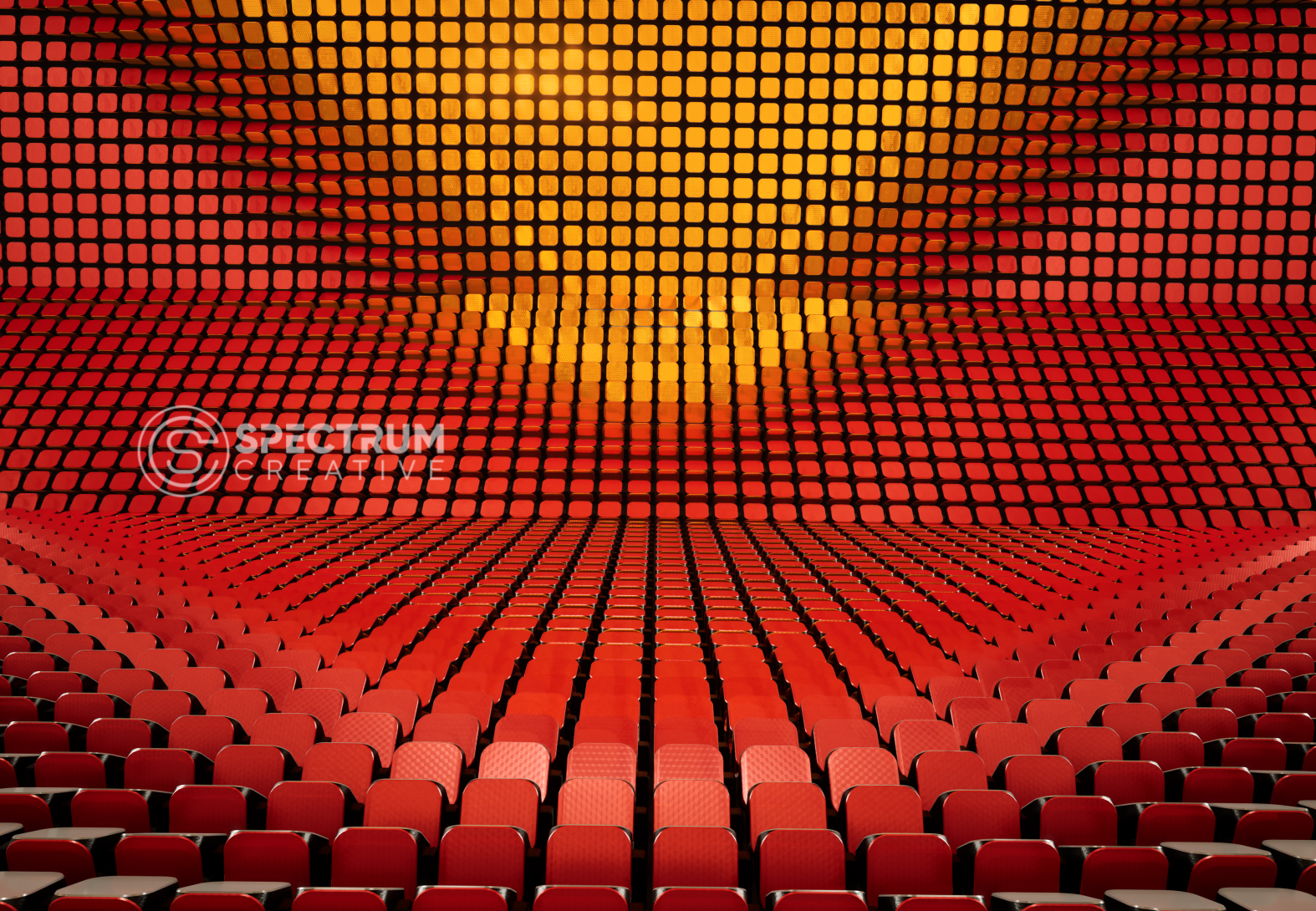
It presents dynamic visuals through physical flipping rather than pixel illumination. Each triangular prism unit rotates independently and forms images through reflected ambient light. It does not create blue-light discomfort, does not glare, and presents different visual qualities under different lighting conditions.
Its role in space is also completely different.
A traditional LED screen acts as a player: content plays on the screen, and the audience watches the screen.
The Mlxos Series acts as part of the space itself. When a wall begins to breathe, move, and respond, it is no longer a display device. It becomes part of the emotional language of the space.
Mlxos 168 requires only 120W/㎡, while conventional LED screens usually consume 600–1000W/㎡. This means energy savings of more than 80%, and the electricity saved over ten years may be enough to cover the cost of a new system.
Its modular quick-install design allows each cabinet to weigh only 7–8kg, while supporting both front and rear maintenance. The mechanical structure is designed for a service life of more than ten years.
This is not a screen.
It is a wall that can breathe.
When architectural surfaces begin to change, the relationship between people and space also changes.
Consumers are no longer passive viewers. They become active experiencers. A wall that can breathe is more likely to make people stop, stay, and share than a screen that simply plays video.
According to Savills’ 2026 Retail Commercial Trends Report, new-generation brands entering offline spaces are placing greater emphasis on brand image building and immersive experiences, aiming to move from short-term popularity to long-term brand relevance. The role of offline stores is no longer limited to sales. They are becoming key touchpoints for experience building and omnichannel integration.
Non-standard commercial spaces are also becoming an important direction in urban retail transformation. By breaking away from standardized shopping mall models, these spaces use personalized, differentiated, and immersive experiences to meet increasingly diverse consumer needs.
Dynamic architectural surfaces are one of the most direct visual languages of this non-standard commercial future.
A wall is no longer just a wall. It begins to breathe, move, and respond.
A ceiling is no longer just a ceiling. It begins to flow, shift, and become an outlet for spatial emotion.
An LED screen is an installed device. Its frame and thickness remind consumers that it has been added onto the space. A dynamic architectural surface is a spatial surface that appears to grow out of the architecture. LED modules and architectural structures are deeply integrated, allowing the screen to disappear while the surface itself gains dynamic capability.
Yes. The Mlxos Series presents dynamic visuals through the physical flipping of triangular prism units. It relies on reflected ambient light rather than self-emitting pixels. It has no screen frame and does not create the psychological impression of “this is a screen.” It can be embedded into walls, ceilings, and columns, becoming part of the architectural surface itself.
Dynamic architectural surfaces are suitable for brand flagship stores, commercial complexes, showrooms, hotel lobbies, and public art spaces — especially spaces that need to be remembered rather than simply seen. When a brand wants consumers to stay longer, feel more deeply, and share more actively, a dynamic architectural surface can be more effective than a traditional screen.
Yes. Mlxos 168 requires only 120W/㎡, while conventional LED screens usually consume 600–1000W/㎡, achieving energy savings of more than 80%. For a 100㎡ project, the electricity savings over ten years can reach approximately 600,000–1.1 million CNY.
The Mlxos Series adopts a modular quick-install design. A single cabinet measures 500×500mm, with a cabinet thickness of 160–225mm. It supports multiple installation methods, including wall mounting, ceiling installation, upward-facing installation, and customized irregular installation.