
2026-10-14
Share


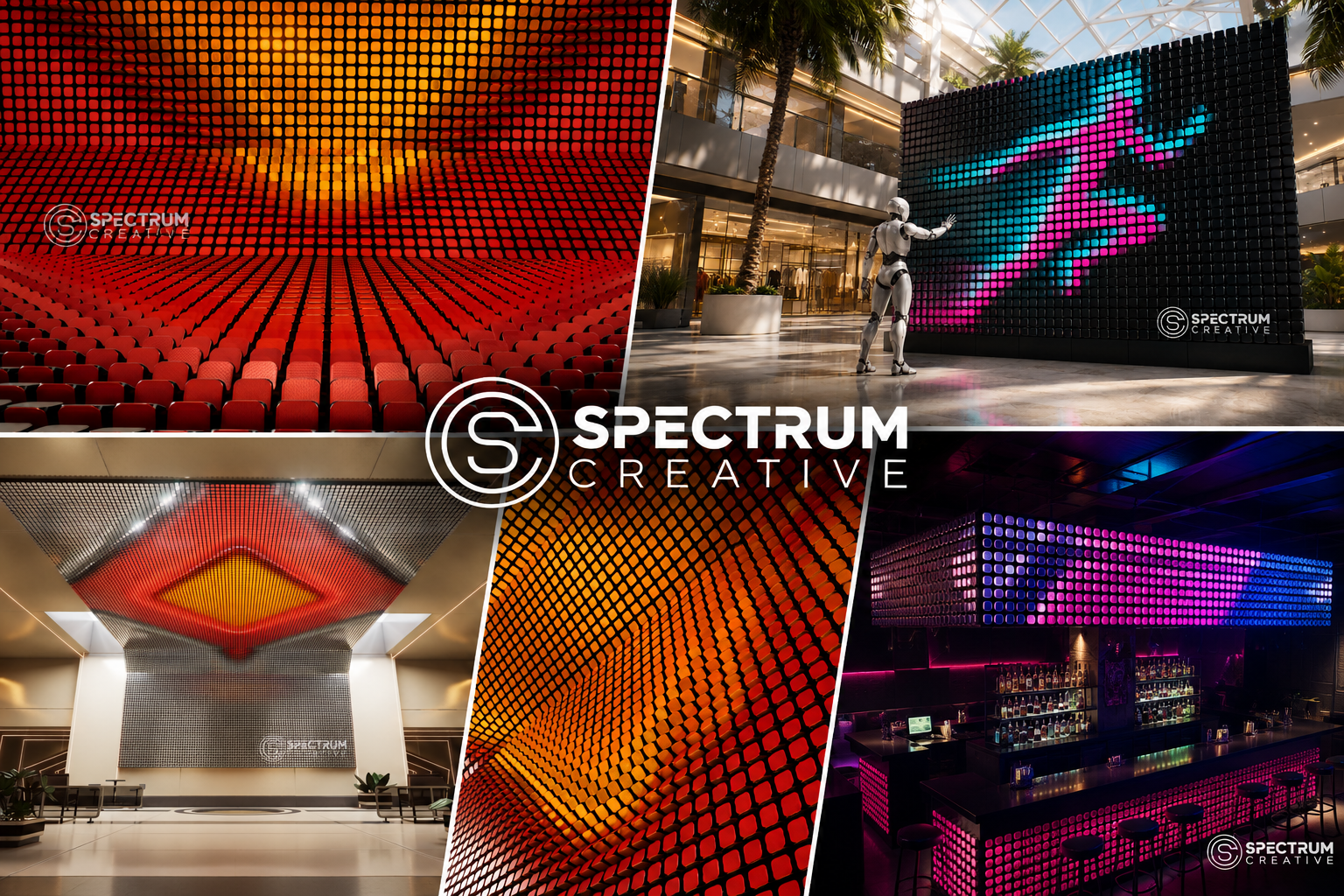
A wall begins to move slowly at the end of a shopping mall corridor. Colors shift. Waves rise and fall. Children reach out to touch it, adults lift their phones to record it, and even people waiting in line nearby turn their heads for a second look.
In the first week after opening, the space is crowded. In the first month, visitor traffic looks promising. Six months later, the wall is still moving, but fewer people are filming it. One year later, it has become “that thing that has been there for a long time.”
This is not a technology problem.
It is an operation problem.
In 2025, the global immersive entertainment market reached USD 146.6 billion. During the same period, China’s experience economy reached RMB 18.4 trillion, with year-on-year growth of 22.6%. But another industry survey revealed a more worrying reality: more than half of organizations felt market demand was lower than expected, while up to 94% of companies were under pressure from operating costs.
The market is growing. Budgets are being spent. But many projects fail to survive beyond the second year.
One-sentence definition:
A dynamic visual space designed for long-term operation is an asset-based project that uses modular hardware, an upgradable software architecture, and a continuous content update mechanism to keep creating visual attraction and commercial value at controllable cost after the first year of investment.
Simply put:
It is not “finished once installed.” It is “only beginning after installation.”
A brand spends money, opens the space, and impresses everyone.
Then what?
The same content shown on opening day is still playing one year later.
No matter how impressive a visual effect is, people will feel tired after seeing it many times. A visitor may take photos during the first visit. During the second visit, they realize nothing has changed. By the third visit, there is no reason to stop.
Modules begin to show color deviation. Mechanical parts make abnormal noise. Motion becomes less smooth. But no one handles it in time.
The space slowly changes from “impressive” to “acceptable,” and eventually to “barely working.”
Spring Festival, Christmas, brand anniversaries, campaign launches — these are natural marketing opportunities. But if the space does not respond to any of them, consumers have no reason to “come back and see it again.”
Traditional solutions often lack modular design. When a failure occurs, large sections may need to be replaced, causing maintenance costs to increase year by year.
Some brands spend millions building a dynamic visual space, only to face large-area color deviation two years later. The repair quotation may reach one-third of the cost of new equipment. The client is then caught in an awkward situation: too expensive to repair, too difficult to remove, and no longer good enough to use.
The difference between a long-term dynamic visual space and a project that peaks on opening day is not simply how expensive the hardware is.
The real question is whether the project was designed for the second year.
Content update is not just a question of whether the brand wants to do it. It is a question of whether the system allows it.
Many projects use playback systems that only support specific formats or resolutions. Every content update requires the original supplier to intervene, leaving the brand’s own marketing team unable to operate the space independently.
A better content architecture should allow the brand team, after basic training, to handle daily content switching on their own. The system should support standardized content formats and a mature content production ecosystem.
Traditional solutions often require large-scale dismantling for repair, taking several days and affecting business operations.
Modular design allows a single faulty module to be replaced quickly on site without removing the entire structure. Front and rear maintenance design also gives technicians more flexibility, reducing maintenance difficulty and safety risks.
The Mlxos Series adopts a modular structure, with each cabinet weighing only 7–8kg. Annual maintenance budgets should usually account for 5%–10% of equipment value, but many projects fail to include this cost during the budgeting stage.
Power consumption, maintenance, and content updates should all be estimated before the project starts.
Take electricity cost as an example. A conventional LED screen usually has a rated power consumption of around 400–600W/㎡. For a 100㎡ screen running 8 hours per day at an industrial electricity rate of 0.8 CNY/kWh, the annual electricity cost is around 93,000–140,000 CNY.
By contrast, Mlxos 168 requires only 120W/㎡, with an estimated annual electricity cost of around 28,000 CNY. That means an annual saving of 60,000–110,000 CNY. Over ten years, the saving can reach 600,000–1.1 million CNY.
The control system should support multiple preset themes and quick switching.
Christmas should have a Christmas mode. Spring Festival should have a Spring Festival mode. Brand events should have exclusive campaign visuals. The switching time should be measured in minutes, not days.
In 2025, Beijing apm introduced the healing IP “minini,” turning the shopping center into an immersive winter camp where visitors lined up to take photos with IP characters. SKP also created a winter-exclusive experience through immersive interactions such as the “Aurora Parade.”
These cases point to one clear conclusion:
A space that can change its visual identity is a space that gives people a reason to return.
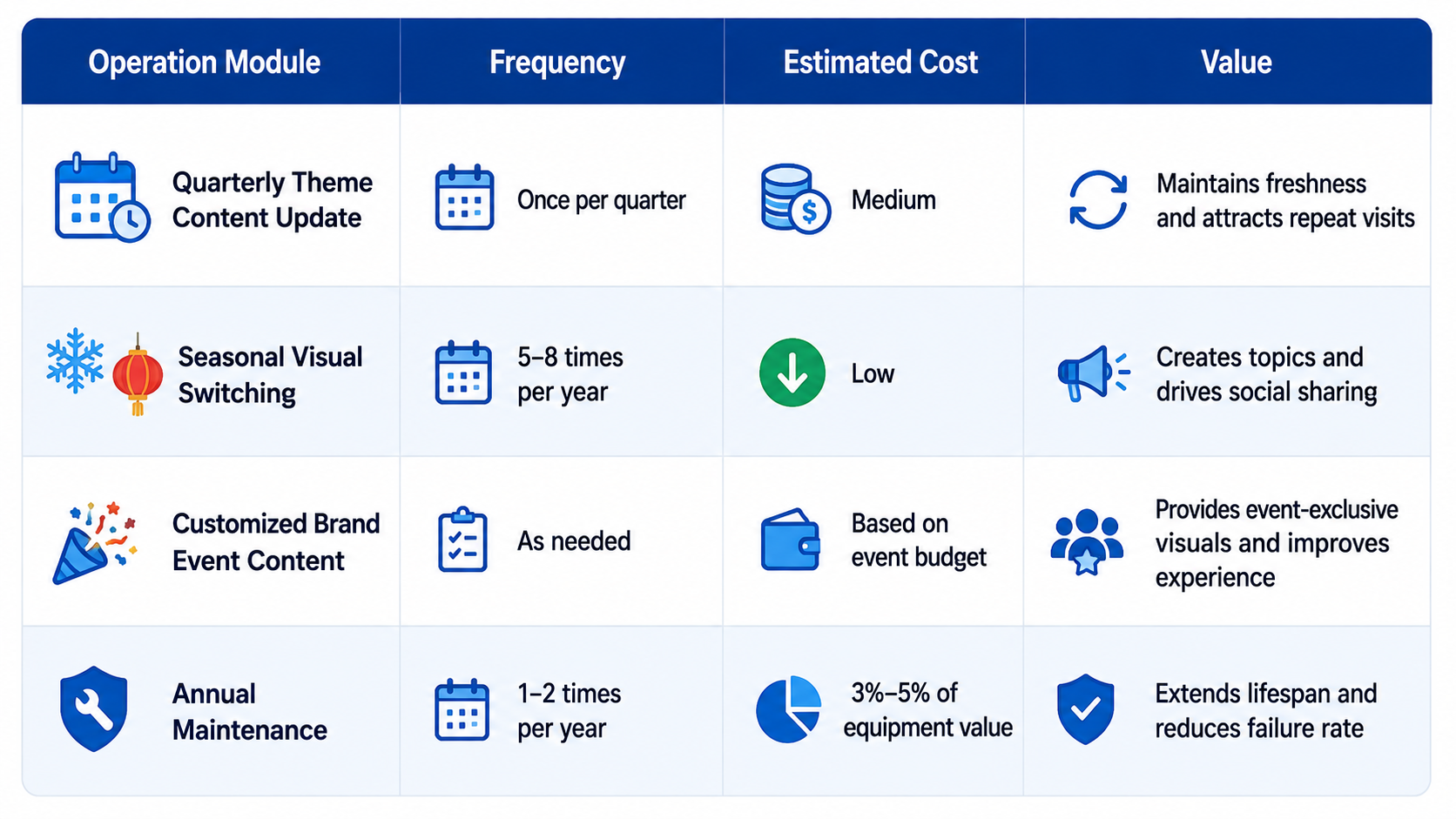
A practical operation rhythm can follow the model of quarterly major updates, monthly small updates, and seasonal campaign updates.
A quarterly major update can follow the brand’s marketing calendar and introduce a new visual theme every quarter. Monthly small updates can replace selected visual elements to maintain freshness. Seasonal updates can respond to Spring Festival, Mid-Autumn Festival, Christmas, brand anniversaries, and other key marketing moments.
Through professional playback and control platforms such as TouchDesigner, MADRIX, DMX512, and Art-Net, content teams can switch and update visual content more efficiently. The Mlxos Series control system also supports preset theme packages and quick recall.
One of the biggest advantages of a dynamic visual space is that it can change.
Spring Festival, Christmas, Valentine’s Day, National Day, brand launches, and anniversary campaigns can all become opportunities for content refresh.
Through the control system, the flipping pattern, color combination, and movement rhythm can be adjusted quickly, allowing the space to switch from “daily mode” to “seasonal mode” within minutes.
Distinctive seasonal visuals naturally encourage visitors to take photos and share them online. From visit to experience, from consumption to social sharing, the space can form a positive cycle of brand communication.
At the early stage of the project, it is recommended to purchase key spare parts together with the main system. A spare parts ratio of 3%–5% of the total quantity can help avoid long downtime caused by discontinued components or international logistics delays.
An annual maintenance contract should also be established so that maintenance cost changes from unpredictable to budgetable, and from passive response to proactive management.
The modular design of the Mlxos Series significantly reduces single-repair cost. Instead of dismantling an entire wall, technicians only need to replace the affected module.
A brand-specific content library should be built from the beginning of the project.
This library can include daily visuals, seasonal themes, brand campaign templates, and event-specific motion patterns. A well-prepared content library can support 2–3 years of content updates, reducing the need to create everything from scratch each time.
Among various dynamic visual solutions, the Mlxos Series — Mlxos Series offers four unique advantages for long-term operation.
Mlxos 168 requires only 120W/㎡, while conventional LED screens usually consume 600–1000W/㎡.
For a 100㎡ project running 8 hours per day, the annual electricity cost of the Mlxos Series is around 28,000 CNY, while a conventional LED screen may cost around 93,000–140,000 CNY per year.
That means the Mlxos Series can save 60,000–110,000 CNY each year. Over ten years, the saving can reach 600,000–1.1 million CNY.
The Mlxos Series adopts a modular design. Each cabinet weighs only 7–8kg and supports front and rear maintenance.
If a single module fails, it can be replaced quickly on site without large-scale dismantling. Technicians do not need a complex rear maintenance corridor, and business operations can continue with minimal interruption.
Through the control system, the brand team can adjust flipping patterns, color combinations, and motion rhythms at any time.
Seasonal theme switching can be completed in minutes instead of days.
The mechanical flipping structure is designed for a service life of more than 10 years, based on 8 hours of daily use and around 300 operating days per year. LED modules have a lifespan of more than 50,000 hours.
With regular maintenance and continuous content updates, the space can continue operating for more than ten years.
It depends on the update method. Creating a completely new 3D model can be costly, but switching existing theme packages through playback and control systems such as TouchDesigner or MADRIX is much more affordable.
It is recommended to build a brand-specific content library at the beginning of the project, so future updates can be based on existing visual assets and only require adjustments.
The Mlxos Series adopts a modular design, allowing individual modules to be replaced independently. This makes maintenance costs significantly lower than traditional solutions that require large-scale dismantling.
The annual maintenance budget is recommended to be around 3%–5% of equipment value. It is also recommended to purchase key spare parts at a ratio of 3%–5% of the total quantity to avoid long downtime caused by discontinued components or logistics delays.
Yes. Mlxos 168 requires only 120W/㎡, while conventional LED screens usually consume 400–600W/㎡.
For a 100㎡ project running 8 hours per day, the estimated annual electricity cost of the Mlxos Series is around 28,000 CNY, while a conventional LED screen costs around 93,000–140,000 CNY. This means the Mlxos Series can save around 60,000–110,000 CNY per year.
With preset theme packages in the control system, seasonal theme switching can usually be completed within tens of minutes.
The Mlxos Series control system supports multiple preset themes and quick recall, making it suitable for holiday campaigns, brand launches, and special events.
The mechanical flipping structure is designed for a service life of more than 10 years, based on 8 hours of daily use and around 300 operating days per year. The LED modules have a lifespan of more than 50,000 hours.
With regular maintenance and continuous content updates, the space can remain operational and commercially valuable for more than ten years.