
2026-09-07
Share


The Galeries Lafayette in Paris welcomes more than 37 million visitors every year. The iconic department store, built around the historic Haussmann-era glass dome, has always been defined by the relationship between architecture and light. Sunlight once poured through the grand dome, illuminating the entire atrium.
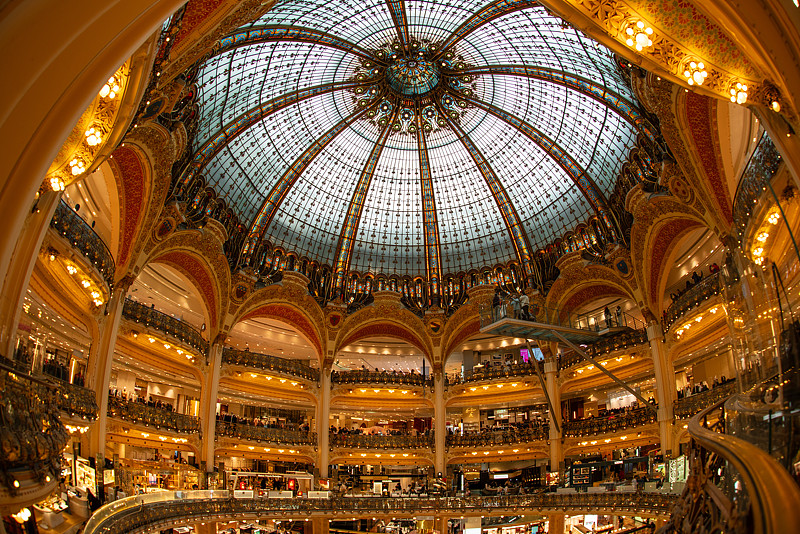
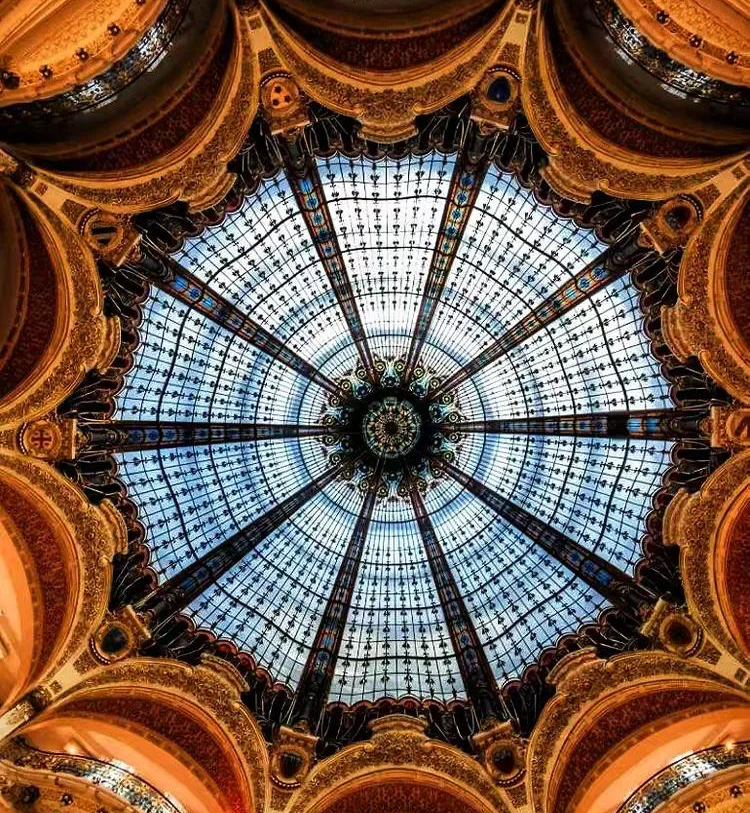
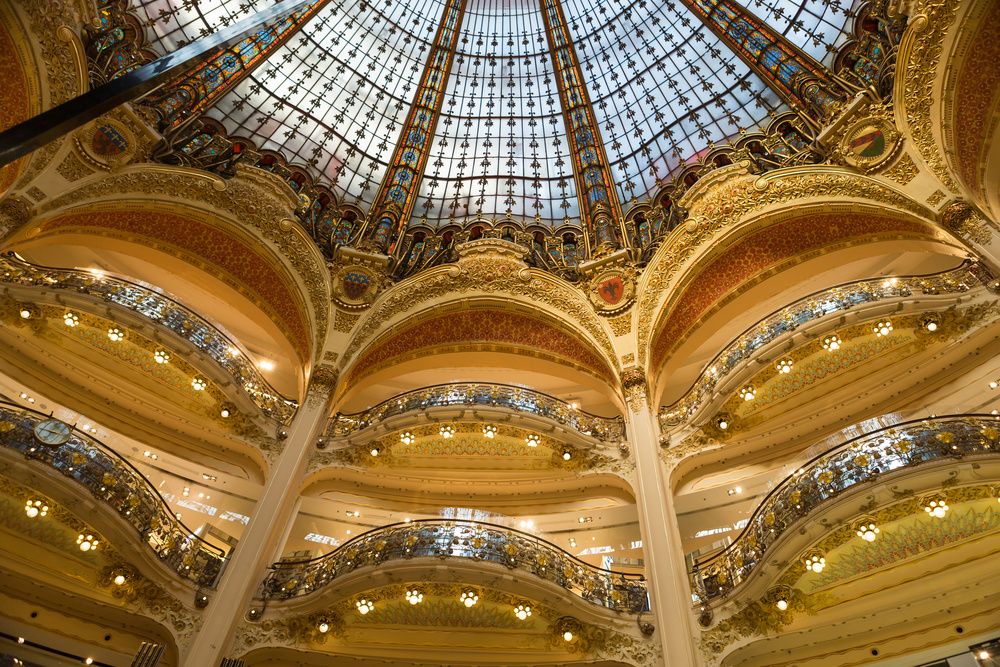
Today, that light is captured by a new kind of architectural language — a wall that appears to “breathe”.
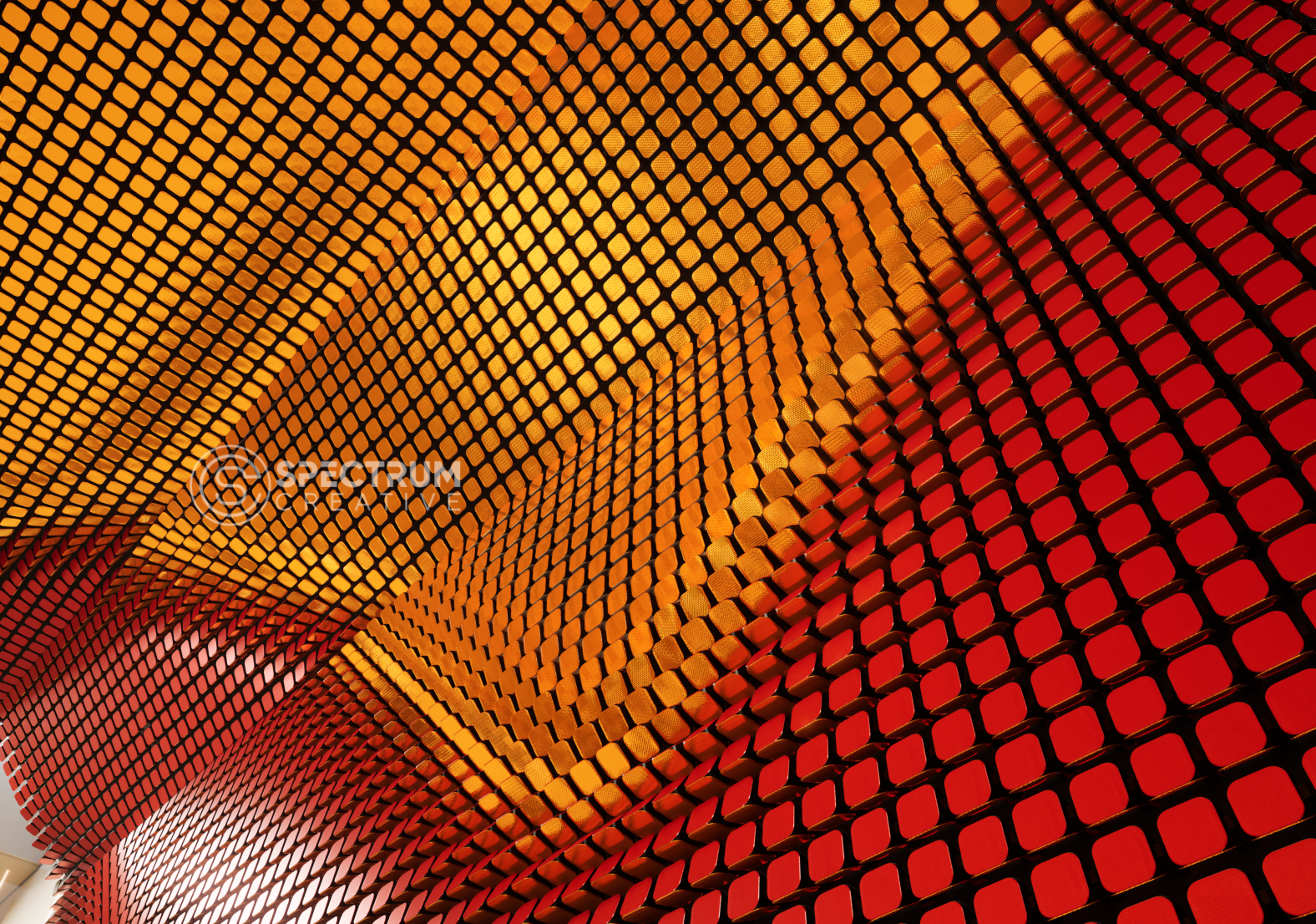
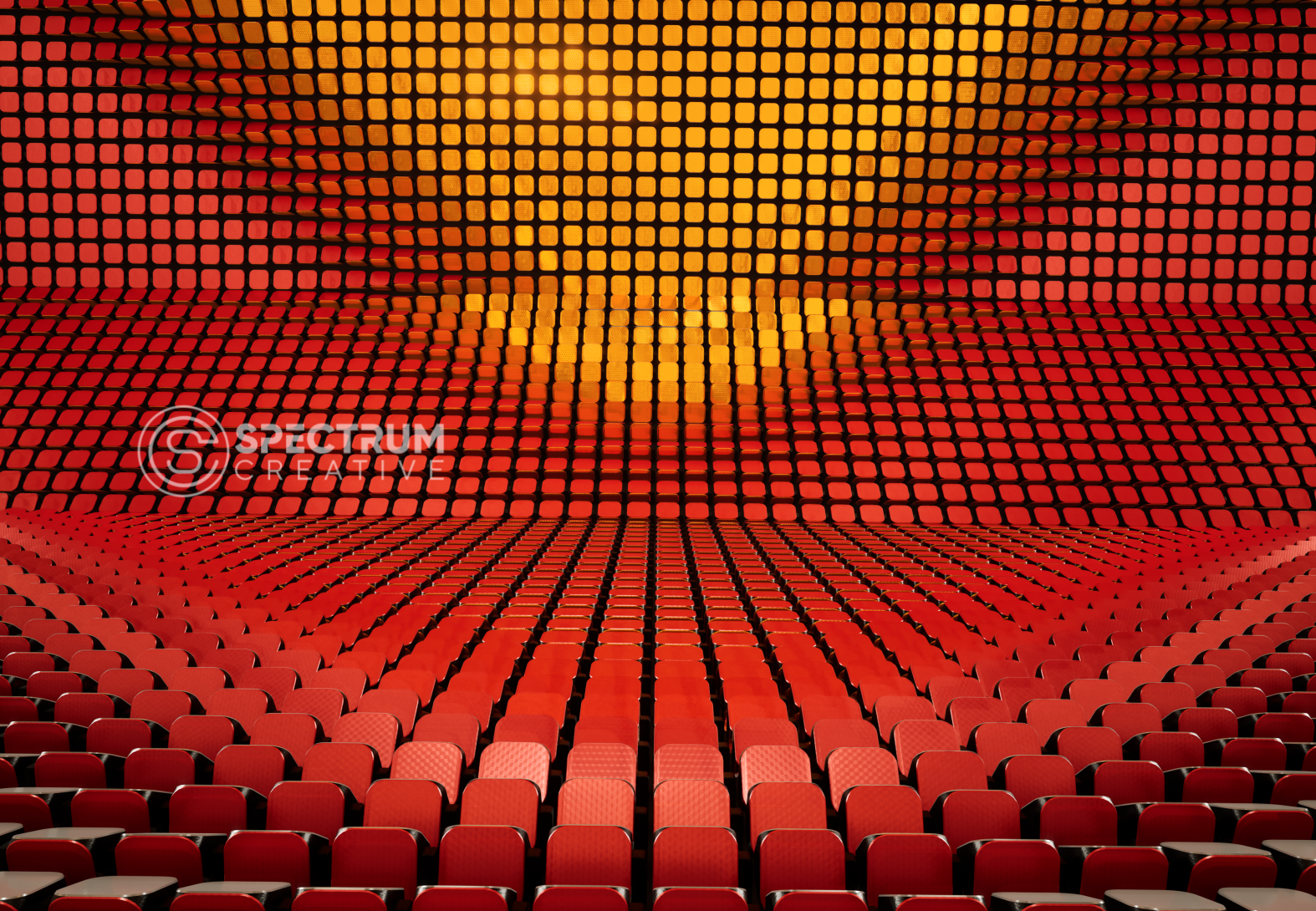
It does not emit light like a traditional LED display. Instead, it reveals different colors, textures, and reflections from every viewing angle. It is not simply a screen, but a mechanical matrix composed of thousands of independent units, where each triangular prism tells a story about space, movement, and design.
The visual identity of commercial spaces is entering a new era.
The evolution of commercial visual experiences has gone through three major transformations.
Traditional commercial spaces relied on fixed visual elements:
l Posters
l Lightboxes
l Sculptures
l Decorative walls
These elements existed independently from the environment. They were placed inside a space, but they did not interact with it.
The relationship between architecture and content was simply:
“A visual object placed on a wall.”
The arrival of LED screens, projection systems, and digital signage introduced dynamic content.
Brands could now update messages instantly. Images could change. Videos could play.
However, the fundamental limitation remained:
A screen was still a flat, glowing surface.
No matter how high the resolution or how accurate the colors were, audiences still recognized it as a display device.
The boundary between “viewer” and “screen” remained obvious.
The next evolution is not about making screens brighter.
It is about making spaces more alive.
Commercial environments are moving from information display toward experience creation.
According to market research, commercial display and digital signage markets continue expanding as brands invest more heavily in immersive experiences and digital environments. The global commercial display market is projected to grow significantly from 2025 onward, while creative LED display applications continue gaining attention as brands seek differentiated experiences.
Behind these numbers is a clear trend:
Consumers no longer simply want to see information.
They want to enter an experience.
This is where Mlxos series emerges.
Mlxos series is a dynamic mechanical display system based on triangular prism rotating units. Driven by precision motors, each unit physically flips between different surface patterns to create changing visual effects. Unlike traditional self-emissive displays, it combines mechanical movement, environmental light reflection, low power consumption, and architectural integration to create a new category between digital display and spatial design.
Walk into any modern shopping mall today, and you will likely find large LED walls displaying advertisements.
The images are beautiful.
The colors are vivid.
The brightness is impressive.
Yet many visitors only look for a few seconds before moving on.
The problem is not the content.
The problem is the medium.
Traditional LED displays are still fundamentally “screens”.
They display information, but they rarely become part of the architecture itself.
A consumer subconsciously understands:
“This is a display showing content.”
The experience remains one-directional.
Static architectural materials face another limitation.
A marble wall, metal sculpture, or wooden surface may have authentic material value, but they cannot respond to:
l Time
l Lighting conditions
l Events
l Human movement
l Brand campaigns
The space remains unchanged.
However, modern commercial spaces increasingly require a sense of rhythm and transformation.
Morning.
Afternoon.
Night.
Festival season.
Brand activation.
A successful commercial environment should be able to change its personality with different moments.
Dynamic visual installations create exactly this possibility.
They transform spaces from:
A place where products are displayed
into:
A place where experiences happen.
The biggest breakthrough of Mlxos series is that it changes the definition of display.
It is no longer simply a surface that shows content.
It becomes a three-dimensional installation capable of:
l Physical movement
l Light reflection
l Spatial interaction
l Environmental response
Each triangular prism unit rotates independently at speeds of up to 3 rotations per second.
This is not pixel blinking.
This is physical transformation.
Real materials move.
Light reflects on different surfaces.
Shadows change across the environment.
The audience does not see a digital illusion.
They see real objects transforming in real space.
Wave effects.
Matrix transitions.
Multi-surface switching.
Every movement becomes a form of physical storytelling.
Unlike conventional digital animation, mechanical movement creates a unique perception of authenticity because the viewer witnesses actual material transformation.
A commercial atrium can become:
l Calm in the morning
l Energetic during daytime traffic
l Dramatic at night
The architecture itself begins to communicate.
Unlike self-emissive LED screens, Mlxos series relies on physical surfaces and environmental light reflection.
Its appearance changes according to:
l Viewing angle
l Natural light
l Artificial lighting
l Surrounding environment
Morning sunlight creates soft reflections.
Afternoon lighting produces stronger contrast.
Night illumination creates a completely different visual atmosphere.
It behaves less like a monitor and more like a living architectural sculpture.
The effect cannot be completely replicated through digital rendering because it comes from real physical interaction between:
l Material
l Light
l Space
l Human movement
Mlxos series can integrate with interactive systems including:
l TouchDesigner
l Cameras
l LiDAR sensors
l DMX512
l Art-Net
This allows the installation to respond to visitors.
When people approach:
l The movement pattern can change
l Colors can shift
l Wave effects can appear
l The rhythm can synchronize with events
The space is no longer showing something to people.
It is communicating with them.
This transformation represents the future direction of commercial visual experience:
From display
to
interaction.
A successful commercial landmark requires three capabilities:
Visual impact
Social sharing value
Long-term operational value
Mlxos series combines all three.
Physical movement creates a level of attention that traditional displays struggle to achieve.
When:
l A wall starts breathing
l A ceiling starts flowing
l A column starts rotating
people naturally stop.
The reason is simple:
Human vision is highly sensitive to movement.
A dynamic physical installation creates a stronger memory impression than a static image.
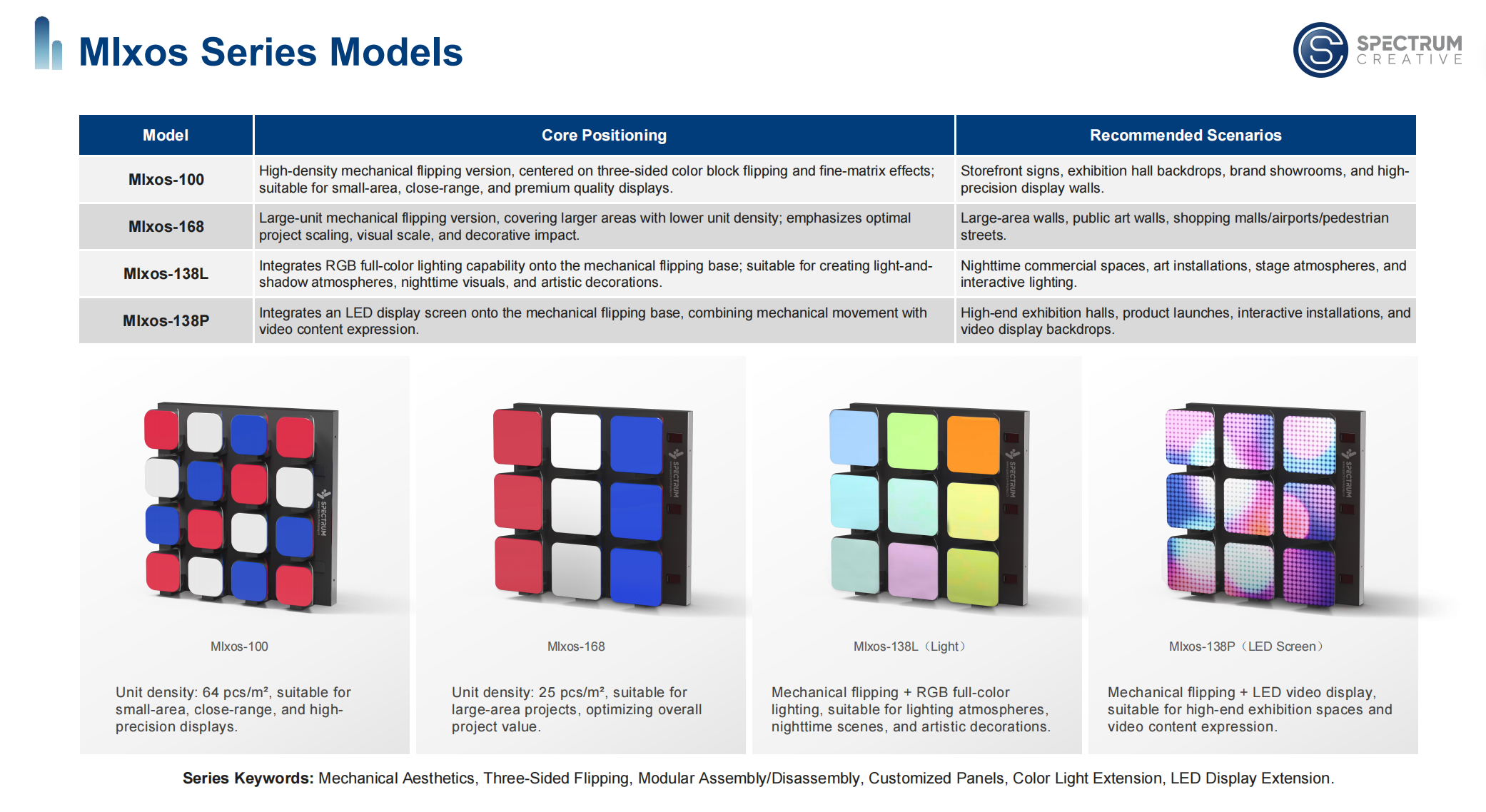
Different Mlxos series models serve different visual requirements:
l 64 units/㎡
l Designed for close-distance viewing
l Suitable for detailed patterns and premium visual presentation
l 25 units/㎡
l Designed for large-scale coverage
l Suitable for distant viewing and energy-efficient installations
In the social media era, “shareability” has become a key measurement of spatial value.
People do not only want to visit places.
They want experiences worth sharing.
A mechanical moving wall creates something traditional screens cannot:
A moment that changes.
Every visitor captures a slightly different visual experience because:
l The viewing angle changes
l The light changes
l The movement changes
The content is not simply a picture.
It is a memory of a physical event.
Mlxos series is not a temporary decoration.
It is an operational digital asset.
Compared with traditional LED systems, Mlxos series provides advantages including:
l Lower energy consumption
l Modular maintenance
l Flexible content updates
l Long-term reuse
For example, Mlxos 168 requires only 120W/㎡, significantly reducing operational energy costs compared with many conventional LED display applications.
Its modular structure allows easier installation and maintenance.
Content can continuously evolve:
l Festival themes
l Brand collaborations
l Seasonal campaigns
l Event programs
The installation remains valuable long after the initial launch.
Shopping malls increasingly require memorable visual landmarks.
Mlxos series can be installed in:
l Atriums
l Entrances
l Corridors
l Feature walls
Different models support different spatial requirements.
Mlxos 100 provides detailed close-range presentation.
Mlxos 168 creates large-scale visual impact.
Luxury brands, automotive showrooms, and premium clubs are increasingly using dynamic environments to strengthen brand identity.
Mlxos series supports customized appearance design:
l 6 color combinations
l 6 surface processes
l 4 texture finishes
Including:
l Glossy
l Matte
l Mirror
l Color-changing effects
Brands can integrate their visual identity directly into the physical structure.
In museums, technology centers, and corporate exhibitions, Mlxos series provides a new storytelling method.
Instead of static information panels, visitors experience:
Movement
Transformation
Interaction
Technology becomes part of the narrative.
At exhibitions, product launches, and brand events, dynamic mechanical movement immediately attracts attention.
A screen that physically transforms with music and lighting is no longer a background.
It becomes the performance itself.
Mlxos 138L integrates RGB full-color lighting capabilities, creating additional possibilities for night environments.
During daytime:
Mechanical visual presentation.
At night:
Dynamic lighting atmosphere.
One installation can serve multiple commercial purposes.
The visual language of commercial spaces is changing.
Displays are no longer only tools for information delivery.
They are becoming:
l Architectural elements
l Interactive experiences
l Brand assets
Mlxos series represents this evolution.
It does not simply illuminate.
It transforms.
It does not simply play content.
It creates movement.
It does not simply decorate space.
It gives space a new language.
When a wall begins to breathe, when a ceiling begins to move, when architecture begins to respond — commercial spaces become more than places people visit.
They become places people remember.
Traditional LED displays create images through self-emissive pixels. Mlxos series creates visual changes through physical rotation and environmental light reflection, offering a unique mechanical texture and architectural presence.
Mlxos series can be used in:
l Shopping malls
l Brand stores
l Exhibition spaces
l Corporate showrooms
l Events
l Nighttime commercial environments
Yes. Some Mlxos series models are designed for significantly lower power consumption. For example, Mlxos 168 operates at approximately 120W/㎡, helping reduce long-term operational costs.
No. Mlxos series adopts modular structures designed for efficient installation and maintenance.
Yes. The system supports customized colors, surface treatments, and textures to match different brand identities.
Mlxos series Model Selection Guide: How to Choose the Right Configuration for Different Applications