
2026-10-06
Share


One-sentence definition:
The integration of robotic screens with architecture means embedding LED modules and precision motion systems into architectural structures, transforming the screen from a mounted device into an active part of the building facade, spatial partition, or interior surface.
The relationship between traditional displays and architecture is mainly attachment.
An LED screen is installed on a wall, suspended from a ceiling, or placed on the floor. It occupies space, but it does not define the space. The boundary of the display remains visible, reminding people that it is a device added to the building.
Robotic screens change this relationship.
When LED modules are deeply integrated with precision mechanical systems, when the screen can extend, retract, rise, rotate, or create physical movement, the display begins to interact with the architecture itself.
The screen is no longer attached to the building. It becomes part of the building.
At the intersection of architecture and digital media, robotic screens are becoming a new form of “digital skin” for spaces.
Traditional digital displays are limited to two-dimensional expression on the X and Y axes. Robotic screens introduce physical depth through the Z axis, allowing pixels to become a three-dimensional architectural element.
The building facade represents one of the most advanced applications of robotic screen integration.
Traditional facades are static. Materials such as stone, glass, and metal panels maintain a fixed appearance.
Robotic screens allow architectural surfaces to gain dynamic expression.
Traditional LED displays create images on a flat surface. Robotic screens add physical movement through precision mechanical modules.
Through matrix-based motion structures, the display surface can respond to music, sensors, or interactive content with real physical movement.
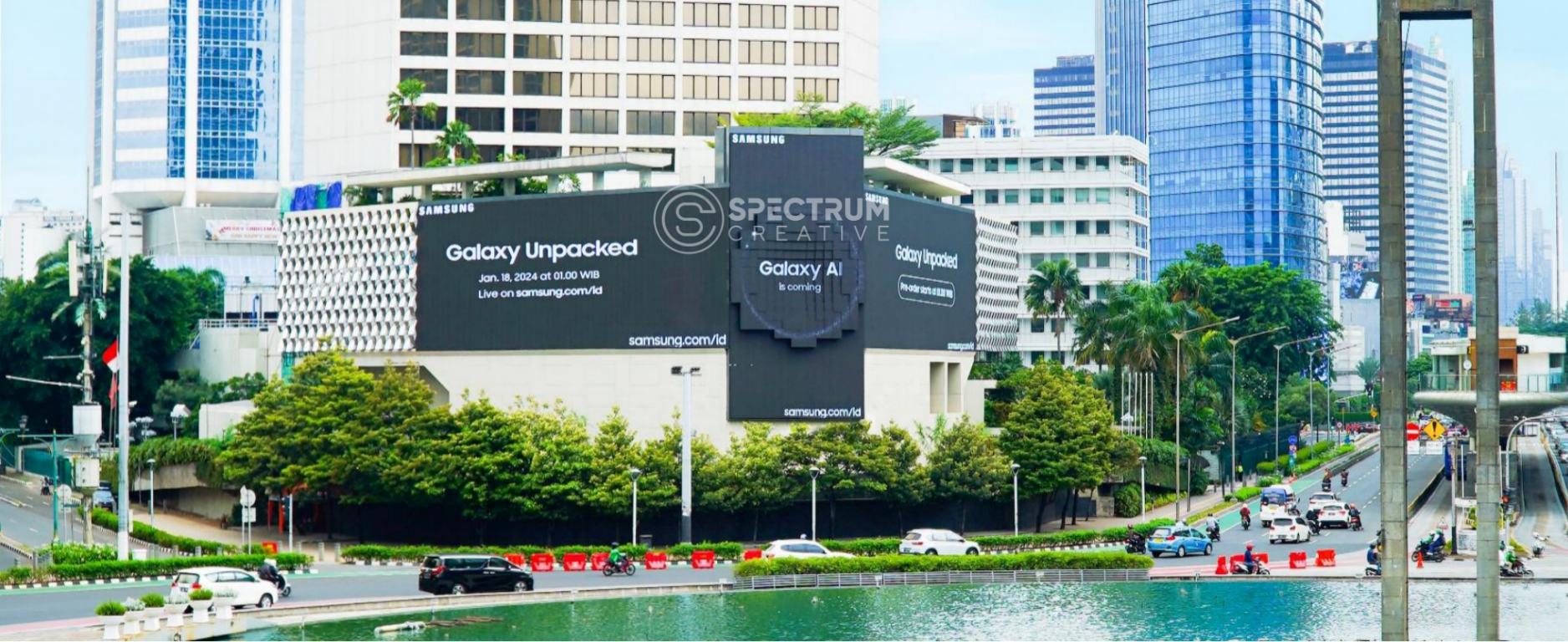
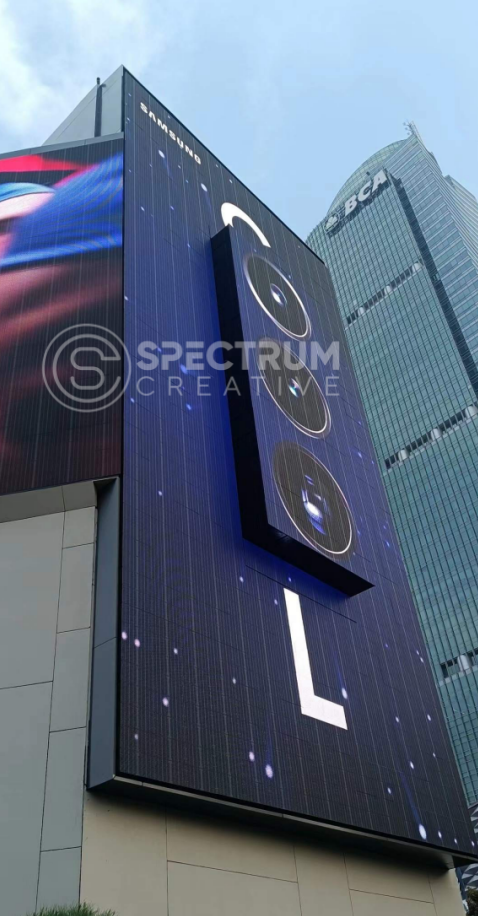
For example, Spectrum Creative’s Jakarta Mandarin Oriental Hotel project combines naked-eye 3D visual content with a dynamic mechanical wave screen structure. The outdoor robotic display transforms the original building surface into a new form of media architecture.
The combination of digital imagery and physical movement creates a stronger spatial experience, allowing the facade to become an active visual element rather than a passive background.
The Jakarta Mandarin Oriental Hotel project demonstrates how robotic screens can become part of architectural identity.
The project uses Spectrum Creative’s outdoor robotic screen solution — Robotic-500.
Located in a tropical environment with high temperatures, humidity above 80%, and annual rainfall exceeding 2,000mm, the system was designed for long-term outdoor operation.
Robotic-500 adopts industrial-grade die-casting manufacturing, a semi-enclosed self-cooling structure, and advanced waterproof and corrosion-resistant protection.
Its heavy-duty industrial servo system enables a maximum physical movement range of 600mm, with a maximum extension speed of 800mm/s.
This large movement depth allows the facade to create dramatic physical effects even from a distance, producing a visual impact similar to waves or flowing surfaces.
The system also uses precision assembly technology and optimized LED placement. By shifting edge LEDs outward while maintaining safe mechanical movement, the display achieves an almost seamless outdoor visual effect.
With a 1430mm-thick steel structural cabinet, independent maintenance channels, and reinforced transmission components, the project combines architectural integration with long-term reliability.
After completion, the installation quickly became a social media attraction.The building is no longer a building with a screen.The building itself becomes the screen.
Inside commercial and cultural spaces, robotic screens play a deeper role.
They are not only visual installations. They redefine spatial boundaries, functions, and user experiences.
High-end commercial spaces often have strict limitations on installation depth.
Traditional mechanical systems usually require significant rear space for motors and maintenance access.
Spectrum Creative’s Robotic-160 addresses this challenge with an ultra-thin structure.
The system reduces the body thickness to only 330mm and supports 100% front maintenance, eliminating the need for rear access channels.
With precision mounting structures, the total finished depth can be controlled at approximately 350mm.
This allows robotic screens to move beyond the image of bulky mechanical equipment and enter the era of the “digital wall surface.”
The front-maintenance architecture of Robotic-160 allows technicians to replace individual modules directly from the front side.
There is no need to remove walls or access the rear structure.
This significantly reduces maintenance time and operating costs, making robotic screens practical for premium retail spaces where every square meter matters.
Traditional robotic screens require physical gaps between moving modules to avoid interference.
These gaps can affect the visual quality of the surface.
Spectrum Creative’s Robotic-128 optimizes the system from the PCB and LED arrangement level.
Through precision LED offset design and structural optimization, it reduces physical gaps to only 0.5mm while maintaining high-speed mechanical movement.
At normal viewing distances, these gaps become visually invisible.
Combined with high-speed servo response reaching 800mm/s, the mechanical matrix transforms into a continuous digital surface — a flexible “digital fabric” capable of movement and visual expression.
The integration of robotic screens and architecture requires coordination between three systems.
Robotic screen structures must be planned together with the building design.
Specifications such as:
Robotic-160’s 330mm ultra-thin body
Robotic-500’s 600mm movement range
Industrial-grade structural design
are not simply product parameters.
They are architectural parameters.
Spectrum Creative’s robotic screen products adopt a modular “digital building material” concept, allowing precise assembly and reducing installation complexity.
A robotic screen must respond to how people use a space.
Spectrum Creative indoor robotic screen systems include a 3kg intelligent anti-pinch safety system and support DMX512 and Art-Net protocols.
Through integration with interactive engines such as TouchDesigner and high-precision sensors, the mechanical surface can respond to human movement and create real-time physical interaction.
At the control level, Spectrum Creative adopts automotive-grade LED CAN Bus architecture.
The system supports up to 65,536 motion units operating simultaneously, enabling precise synchronization between movement and content.
Its proprietary Motion Track Editing System V1.0 enables frame-level synchronization between mechanical movement and video content while incorporating intelligent collision prevention algorithms.
For robotic screens, content is not simply about what is displayed.
It is about what the space wants to communicate.
When a facade begins to move or an interior wall begins to transform, content becomes part of the architecture itself.
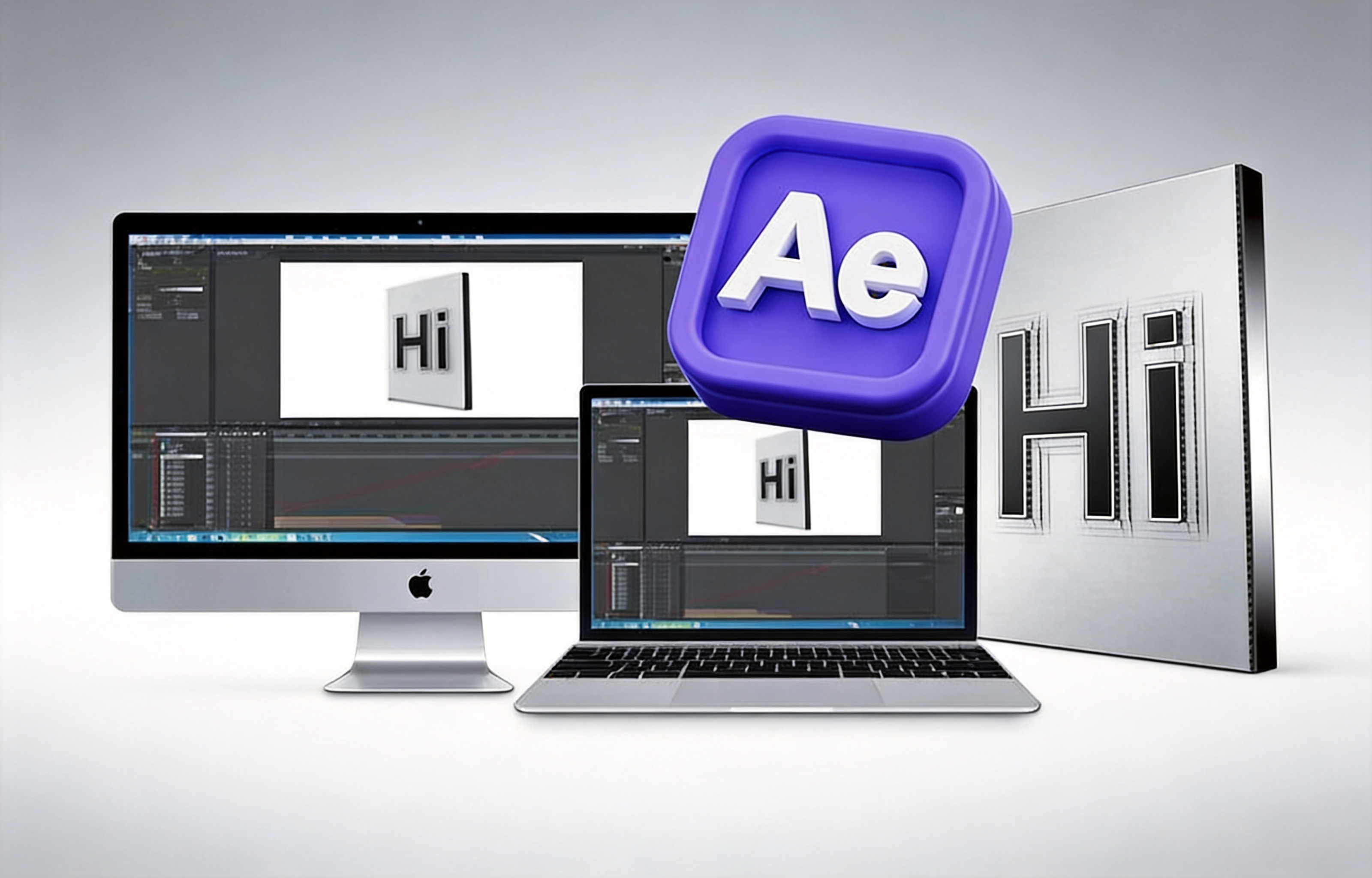
Through 3D mapping and spatial simulation technology, physical movement and collision testing can be verified digitally before installation.
Robotic screens should not be considered as equipment added at the end of construction.
They should be included during architectural concept development.
Important factors include:
Structural reservation
Mechanical integration
Electrical planning
Movement space
The 350mm finished depth of Robotic-160 and the 600mm movement range of Robotic-500 directly influence architectural planning.
A robotic screen is not simply a machine with a display.
It is a dynamic architectural material.
Just like selecting stone, wood, or metal panels, designers can use robotic screens as a surface material with movement capability.
Spectrum Creative is moving beyond traditional display manufacturing toward complete spatial visual solutions.
The physical appearance of a robotic screen when no content is playing is also part of the design.
With its ultra-thin structure, Robotic-160 can function like a refined digital artwork even when stationary.
When still, it becomes part of the wall.
When moving, it becomes part of the story.
When walls begin to breathe, ceilings begin to move, and architectural surfaces begin to transform, commercial spaces become more than places where products are displayed.
They become places where experiences happen.
The integration of robotic screens and architecture represents a fundamental shift:
Displays are moving from attached devices to structural elements.
The goal is not simply to make screens thinner, brighter, or clearer.
The goal is to make the screen disappear and allow the space itself to emerge.
Through innovations such as front-maintenance architecture, MotionMatrix control solutions, and Robotic-500’s 600mm movement capability, Spectrum Creative continues to expand beyond traditional display manufacturing and provide complete spatial visual solutions.
A:
As early as possible. Ideally, robotic screens should be considered during the architectural design stage. Structural planning, electrical integration, and movement space should be confirmed before construction drawings are finalized.
A:
Robotic-160 has a body thickness of only 330mm. With installation structures included, the total finished depth can be controlled within approximately 350mm, allowing it to integrate into many commercial environments.
A:
Robotic-500 uses industrial-grade manufacturing, self-cooling design, and waterproof and corrosion-resistant protection to operate in challenging environments such as high temperature, high humidity, strong UV exposure, and coastal climates.
A:
No. The mechanical structure is designed with calculated movement loads and integrated safety systems. Automotive-grade CAN Bus communication ensures synchronized movement, while indoor models include intelligent anti-pinch protection for interactive environments.
A:
No. Modern robotic screens are designed as architectural elements. With its ultra-thin structure, Robotic-160 can function as a refined digital surface even when stationary, becoming part of the interior design rather than an external device.